
Oh, the chaos of dinnertime with three busy kids! I remember one particularly harried Tuesday evening. The spring sun was setting, but the kitchen felt like a whirlwind.
My littlest one was demanding a story, the middle child was “helping” with the dishes (read: splashing water everywhere), and my eldest was trying to explain their latest science project while I was attempting to decipher a recipe. I just needed something wholesome, delicious, and *quick*. That’s when this beautiful Spring Vegetable Pasta recipe truly became a staple in our home.
It saved my sanity and filled our bellies with vibrant, fresh flavors. This isn’t just a meal; it’s a breath of fresh air after a long day, bursting with tender seasonal vegetables and a light, flavorful sauce. This Spring Vegetable Pasta consistently brings smiles to our dinner table, and I know it will do the same for yours.
Why You’ll Love This Spring Vegetable Pasta Recipe
Every parent knows the struggle of getting kids to eat their greens. This Spring Vegetable Pasta makes it surprisingly easy! First, it’s incredibly versatile.
You can swap out vegetables based on what you have, making it a budget-friendly and adaptable meal. Second, it’s genuinely simple to prepare, perfect for busy weeknights when you need a nutritious dinner on the table without fuss. Third, and perhaps most importantly, it truly celebrates the season.
The tender-crisp asparagus, sweet peas, and bright cherry tomatoes bring a burst of freshness that just screams spring. This nourishing pasta dish is packed with vitamins and fiber, ensuring your family enjoys a wholesome meal. Finally, its creamy, bright sauce coats every piece of pasta and vegetable perfectly, creating a comforting yet light dish everyone will adore. This particular spring pasta recipe consistently receives rave reviews from my family, making it a reliable favorite.
Ingredients You’ll Need
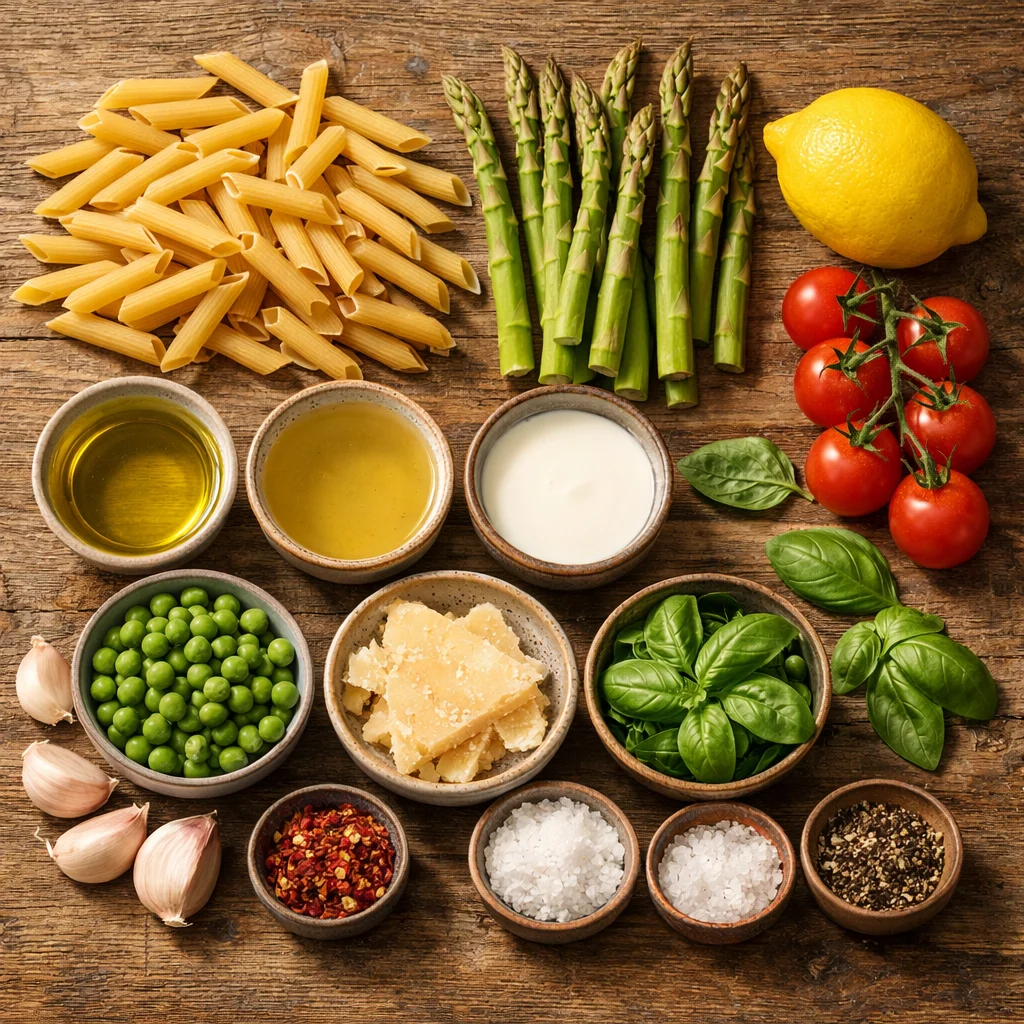
| Ingredient | Quantity |
|---|---|
| Pasta (e.g., penne, rotini, farfalle) | 1 pound |
| Olive oil | 2 tablespoons |
| Garlic, minced | 4 cloves |
| Asparagus, trimmed and cut into 1-inch pieces | 1 bunch (about 1 pound) |
| Frozen peas, thawed | 1 cup |
| Cherry tomatoes, halved | 1 pint |
| Vegetable broth | 1/2 cup |
| Heavy cream (or half-and-half) | 1/2 cup |
| Parmesan cheese, grated | 1/2 cup, plus more for serving |
| Lemon, juiced and zested | 1 medium |
| Fresh basil, chopped | 1/4 cup |
| Salt and freshly ground black pepper | To taste |
| Red pepper flakes (optional) | 1/4 teaspoon |
Substitutions & Variations
One of the beautiful things about this Spring Vegetable Pasta is how forgiving and adaptable it is. Don’t have a particular ingredient? No problem! This spring pasta dish welcomes creativity.
* Vegetables: Feel free to swap or add other seasonal greens. Broccoli florets, snap peas, spinach (add at the very end to wilt), or even thinly sliced zucchini work wonderfully. For a heartier twist, consider adding sautéed mushrooms.
For a vibrant Spring Vegetable Pasta, always choose what’s fresh and in season.
* Pasta: Any short pasta shape works well, like fusilli, orecchiette, or even linguine if you prefer a longer noodle. For a gluten-free Spring Vegetable Pasta, simply use your favorite gluten-free pasta.
* Creaminess: If you prefer a lighter sauce, substitute the heavy cream with milk, unsweetened almond milk, or even omit it and use extra pasta water for a lighter, brothy sauce. A dollop of Greek yogurt or cream cheese can also add creaminess.
* Protein Boost: For a more substantial meal, add cooked chicken breast (shredded or diced), shrimp, canned chickpeas, or white beans.
Cooked salmon also pairs beautifully with this Spring Vegetable Pasta.
* Cheese: Pecorino Romano or nutritional yeast can replace Parmesan cheese.
* Herbs: Fresh dill, parsley, or chives make excellent substitutes or additions to the basil.
* Spice: A pinch more red pepper flakes gives this spring pasta a lovely kick.
* Vegan Option: Omit the heavy cream and Parmesan. Use a plant-based cream (like cashew cream or oat cream) and nutritional yeast for cheesy flavor.
Ensure your pasta is egg-free. This ensures a delicious vegan Spring Vegetable Pasta.
The vibrant versatility of spring produce allows you to experiment beyond just pasta. If you have extra peas, they make an equally refreshing and delightful starter. Consider whipping up a batch of homemade Pea & Mint Soup to complement your meal.
Step-by-Step Instructions
Preparing this Spring Vegetable Pasta is straightforward and enjoyable. Follow these simple steps for a truly delicious meal.
1. Cook the Pasta: First, bring a large pot of salted water to a rolling boil. Add your chosen pasta and cook according to package directions until it’s al dente.
Before draining, reserve about 1 cup of the starchy pasta water. Drain the pasta and set it aside. This reserved water is crucial for the sauce of your Spring Vegetable Pasta.
2. Sauté Aromatics: Next, in a large skillet or Dutch oven, heat the olive oil over medium heat. Add the minced garlic and red pepper flakes (if using).
Sauté for about 1 minute until fragrant, being careful not to burn the garlic.
3. Add Vegetables: Now, add the trimmed asparagus pieces to the skillet.
Cook for 3-5 minutes, stirring occasionally, until they are bright green and tender-crisp. Then, stir in the thawed frozen peas and halved cherry tomatoes. Cook for another 2-3 minutes, just until the tomatoes begin to soften slightly.
4. Create the Sauce: Pour in the vegetable broth and bring it to a gentle simmer. Stir in the heavy cream and lemon zest.
Let the sauce simmer for 2-3 minutes to slightly thicken.
5. Combine and Finish: Add the cooked pasta to the skillet with the vegetables and sauce.
Toss everything together thoroughly. Stir in the grated Parmesan cheese and fresh lemon juice. If the sauce seems too thick, add a splash of the reserved pasta water until it reaches your desired consistency.
6. Season and Serve: Finally, stir in the fresh chopped basil. Taste and adjust seasoning with salt and freshly ground black pepper as needed.
Serve your beautiful Spring Vegetable Pasta immediately, garnished with extra Parmesan cheese and basil, if desired. Enjoy this wonderful spring pasta!
Pro Tips for Success
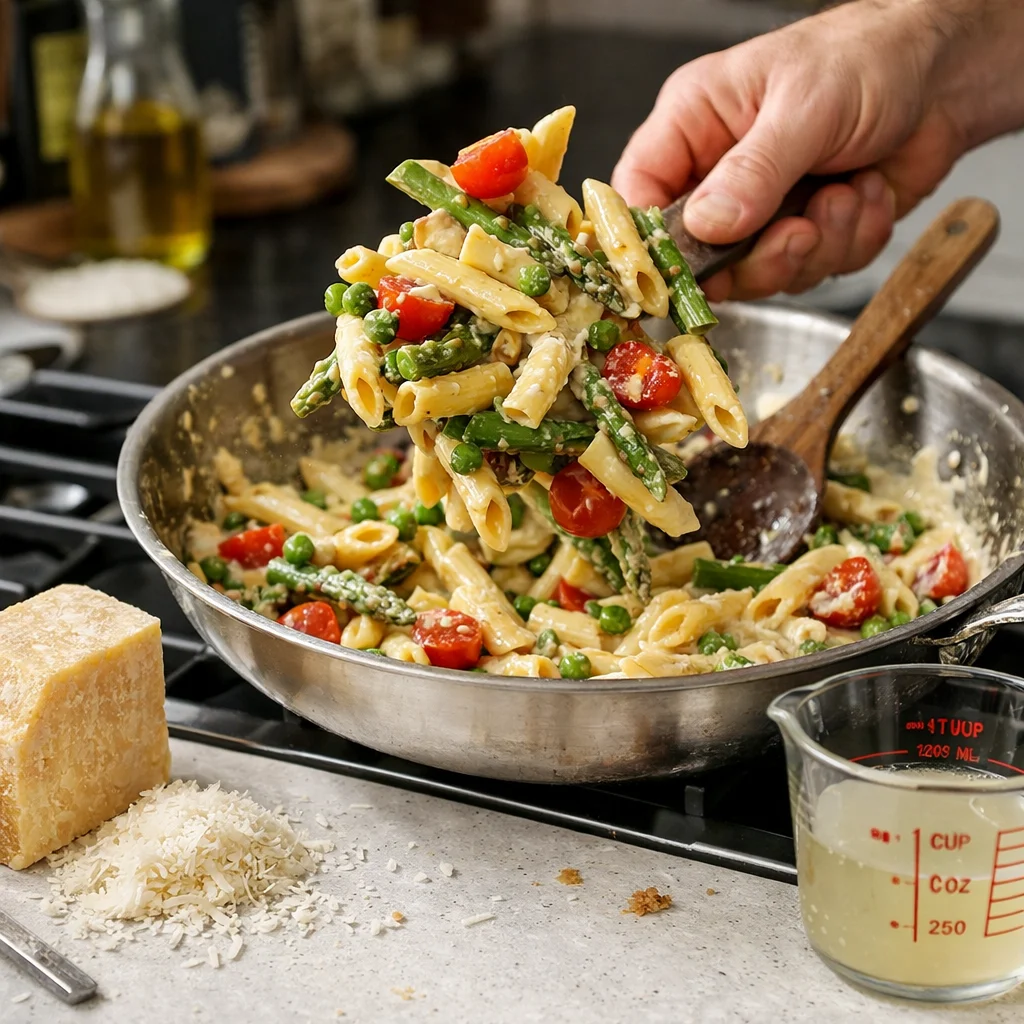
* Don’t Overcook Your Veggies: The key to vibrant Spring Vegetable Pasta is tender-crisp vegetables. Asparagus should still have a slight bite. Adding them at the right time ensures they don’t turn mushy.
Keep an eye on them!
* Reserved Pasta Water is Gold: This starchy liquid isn’t just water; it’s liquid gold for your sauce. It helps emulsify the sauce, making it cling beautifully to the pasta and veggies, creating a cohesive and flavorful Spring Vegetable Pasta.
Don’t skip this step!
* Fresh Herbs Make a Difference: Fresh basil truly brightens this dish. While dried herbs work in a pinch, fresh herbs provide an unparalleled aromatic quality that enhances the overall flavor profile of this spring pasta.
Add them at the very end to preserve their freshness.
* Zest Your Lemon First: Always zest your lemon before you juice it. It’s much easier to get the fragrant zest from a whole lemon.
The zest adds a concentrated burst of citrus flavor without extra liquid, making your Spring Vegetable Pasta sing.
* Season as You Go: Don’t wait until the very end to season. Taste the sauce before adding the pasta, and then adjust salt and pepper after everything is combined.
This layering of seasoning ensures every component of your Spring Vegetable Pasta tastes fantastic.
* High-Quality Ingredients: Since this is a simple dish, the quality of your ingredients truly shines through. Opt for fresh, vibrant spring vegetables and good-quality pasta for the best possible Spring Vegetable Pasta experience.
Just as attention to detail ensures your savory dishes shine, the right techniques also elevate your sweet treats. For another bright and refreshing spring delight, ensure you bake the perfect batch of strawberry lemon bars to complete your seasonal menu.
Storage & Reheating Tips
Having leftovers of this delicious Spring Vegetable Pasta is always a treat! Proper storage ensures you can enjoy it for days to come.
* Storage: Once cooled to room temperature, transfer any leftover Spring Vegetable Pasta to an airtight container. Store it in the refrigerator for up to 3-4 days. The flavors often meld and deepen overnight, making for an even more enjoyable spring pasta meal.
* Reheating: To reheat, you have a few options.
* Stovetop: The best method is on the stovetop. Place the pasta in a skillet over medium-low heat.
Add a splash of vegetable broth, water, or even a little milk or cream to help moisten the sauce. Stir gently until heated through.
* Microwave: For a quicker option, microwave individual portions on a microwave-safe plate or bowl.
Add a tablespoon or two of water or broth, cover loosely, and heat in 30-60 second intervals, stirring in between, until warm. Be careful not to overheat, as this can dry out the pasta and vegetables. This reheating method ensures your Spring Vegetable Pasta stays delicious.
What to Serve With This Recipe
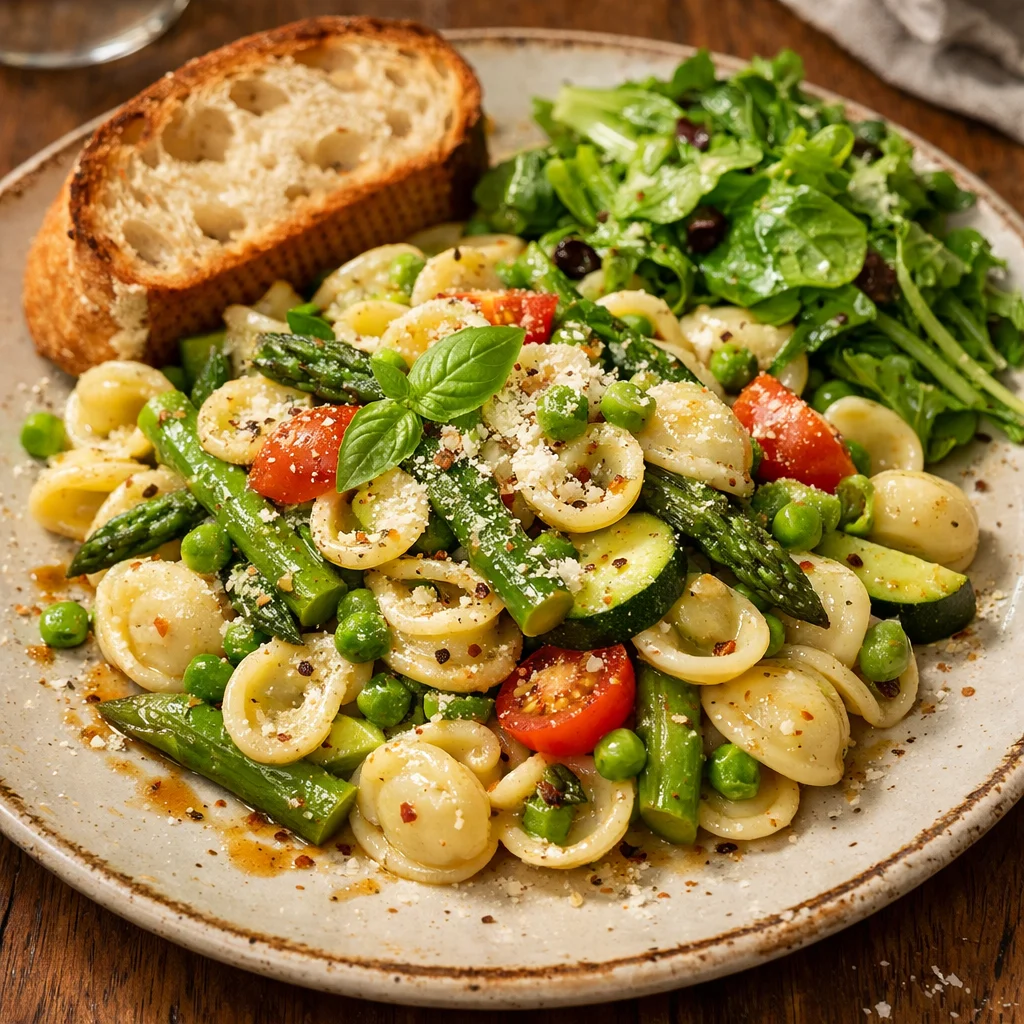
* Crusty Bread: A warm, crusty baguette or a loaf of artisan bread is perfect for soaking up every last bit of that delicious creamy sauce. It’s simple, satisfying, and always a crowd-pleaser with any spring pasta dish.
* Simple Green Salad: A light salad with fresh mixed greens, a few cucumber slices, and a simple vinaigrette dressing offers a refreshing contrast to the richness of the pasta.
It adds extra greens and a nice crunch.
* Garlic Bread: For those who love a bit more indulgence, homemade garlic bread or store-bought garlic knots are a fantastic accompaniment to this Spring Vegetable Pasta.
* Roasted Chicken or Fish: If you’re looking for an additional protein, a simply roasted chicken breast or a flaky baked white fish (like cod or halibut) would complement the light flavors of the Spring Vegetable Pasta beautifully.
* White Wine: For the adults, a crisp Sauvignon Blanc or a light Pinot Grigio pairs wonderfully with the fresh, zesty notes of this spring pasta.
While crusty bread is a wonderful accompaniment, remember that a complete meal often includes a memorable dessert. For a nostalgic and sweet ending that perfectly rounds out any dinner, try this beloved classic pineapple upside down cake.
FAQs
Can I use frozen vegetables instead of fresh for this Spring Vegetable Pasta?
Absolutely! While fresh vegetables truly shine in this Spring Vegetable Pasta, frozen alternatives work beautifully, especially for the peas. For asparagus, if using frozen, add them directly to the sauce and cook until tender-crisp.
You might not need to pre-sauté them as long. Just ensure they are thawed if specified in the recipe. Using frozen options makes this spring pasta even more convenient!
What’s the best type of pasta for this Spring Vegetable Pasta recipe?
Short pasta shapes like penne, rotini, farfalle, or fusilli are excellent choices for this Spring Vegetable Pasta because they effectively capture the creamy sauce and small vegetable pieces. However, feel free to use your family’s favorite. Even a long pasta like spaghetti or linguine can work, though it might be a bit trickier to toss with the vegetables. The key is to choose a pasta that holds up well to the sauce and veggies in this spring pasta dish.
Can I make this Spring Vegetable Pasta ahead of time?
You can certainly do some prep work in advance, like chopping your vegetables and mincing the garlic. However, for the best texture and flavor, I recommend assembling and cooking the Spring Vegetable Pasta just before serving. Pasta can absorb a lot of sauce and become soft if left to sit too long.
If you must make it ahead, cook the pasta al dente and undercook the vegetables slightly. Reheat gently on the stovetop with a splash of broth or water.
How can I make this Spring Vegetable Pasta dairy-free?
Making this Spring Vegetable Pasta dairy-free is easy! Substitute the heavy cream with a plant-based cream alternative like unsweetened cashew cream, oat milk creamer, or a full-fat canned coconut milk (though this might impart a slight coconut flavor). For the Parmesan cheese, use a dairy-free Parmesan alternative or nutritional yeast for a cheesy umami flavor. This modification ensures a delicious dairy-free spring pasta.
Spring Vegetable Pasta celebrates the bounty of the season, incorporating fresh, tender produce like asparagus, peas, and cherry tomatoes. This dish exemplifies light, flavorful cooking often found in Mediterranean-inspired cuisine. Its appeal lies in its simplicity and the ability to highlight the natural sweetness and vibrant textures of seasonal pasta.
Nutrition Information (per serving)
Please note: Nutritional information is an estimate based on ingredients listed and may vary depending on exact quantities and brands used. This estimate is for one serving of Spring Vegetable Pasta.
| Nutrient | Amount |
|---|---|
| Calories | 480 kcal |
| Total Fat | 20g |
| Saturated Fat | 10g |
| Cholesterol | 45mg |
| Sodium | 450mg |
| Total Carbohydrates | 55g |
| Dietary Fiber | 7g |
| Total Sugars | 5g |
| Protein | 18g |
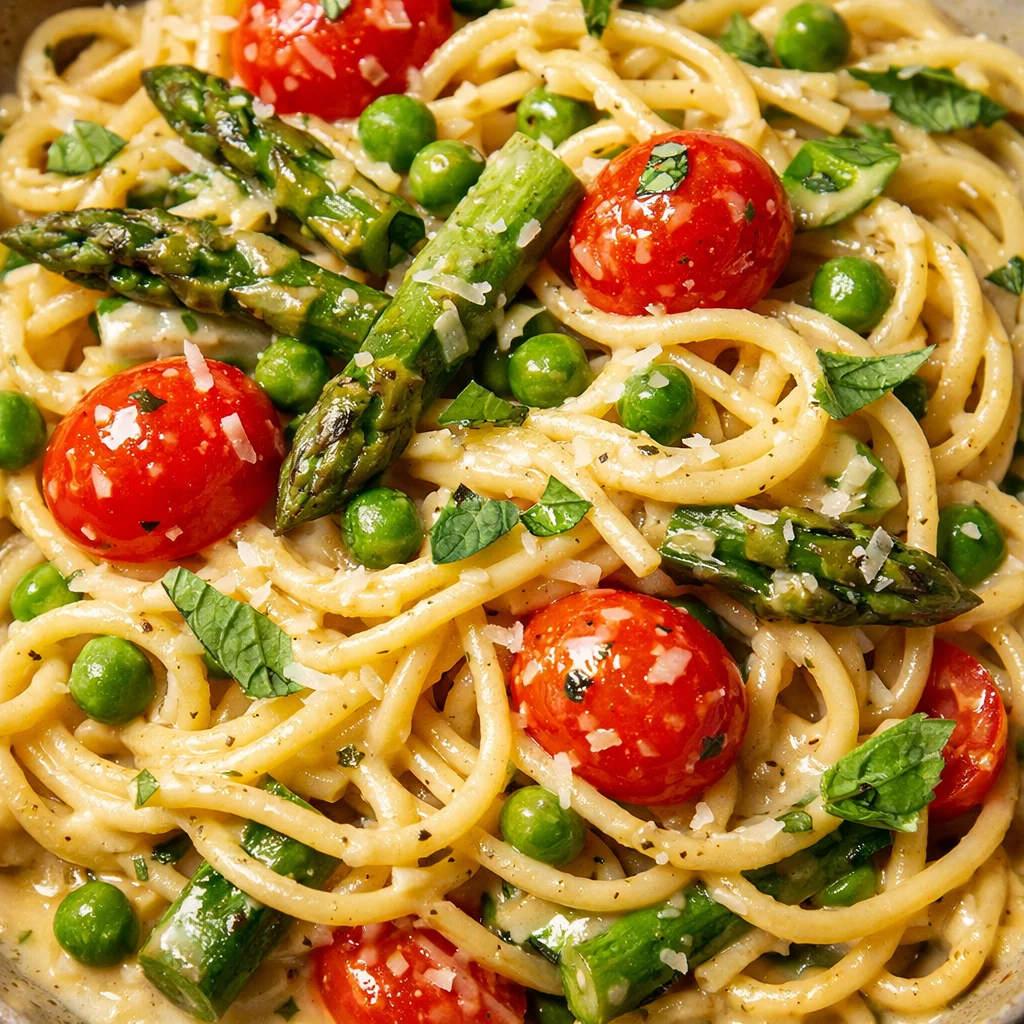
Spring Vegetable Pasta
Ingredients
Method
- Cook the Pasta: First, bring a large pot of salted water to a rolling boil. Add your chosen pasta and cook according to package directions until it's al dente. Before draining, reserve about 1 cup of the starchy pasta water. Drain the pasta and set it aside. This reserved water is crucial for the sauce of your Spring Vegetable Pasta.
- Sauté Aromatics: Next, in a large skillet or Dutch oven, heat the olive oil over medium heat. Add the minced garlic and red pepper flakes (if using). Sauté for about 1 minute until fragrant, being careful not to burn the garlic.
- Add Vegetables: Now, add the trimmed asparagus pieces to the skillet. Cook for 3-5 minutes, stirring occasionally, until they are bright green and tender-crisp. Then, stir in the thawed frozen peas and halved cherry tomatoes. Cook for another 2-3 minutes, just until the tomatoes begin to soften slightly.
- Create the Sauce: Pour in the vegetable broth and bring it to a gentle simmer. Stir in the heavy cream and lemon zest. Let the sauce simmer for 2-3 minutes to slightly thicken.
- Combine and Finish: Add the cooked pasta to the skillet with the vegetables and sauce. Toss everything together thoroughly. Stir in the grated Parmesan cheese and fresh lemon juice. If the sauce seems too thick, add a splash of the reserved pasta water until it reaches your desired consistency.
- Season and Serve: Finally, stir in the fresh chopped basil. Taste and adjust seasoning with salt and freshly ground black pepper as needed. Serve your beautiful Spring Vegetable Pasta immediately, garnished with extra Parmesan cheese and basil, if desired. Enjoy this wonderful spring pasta!