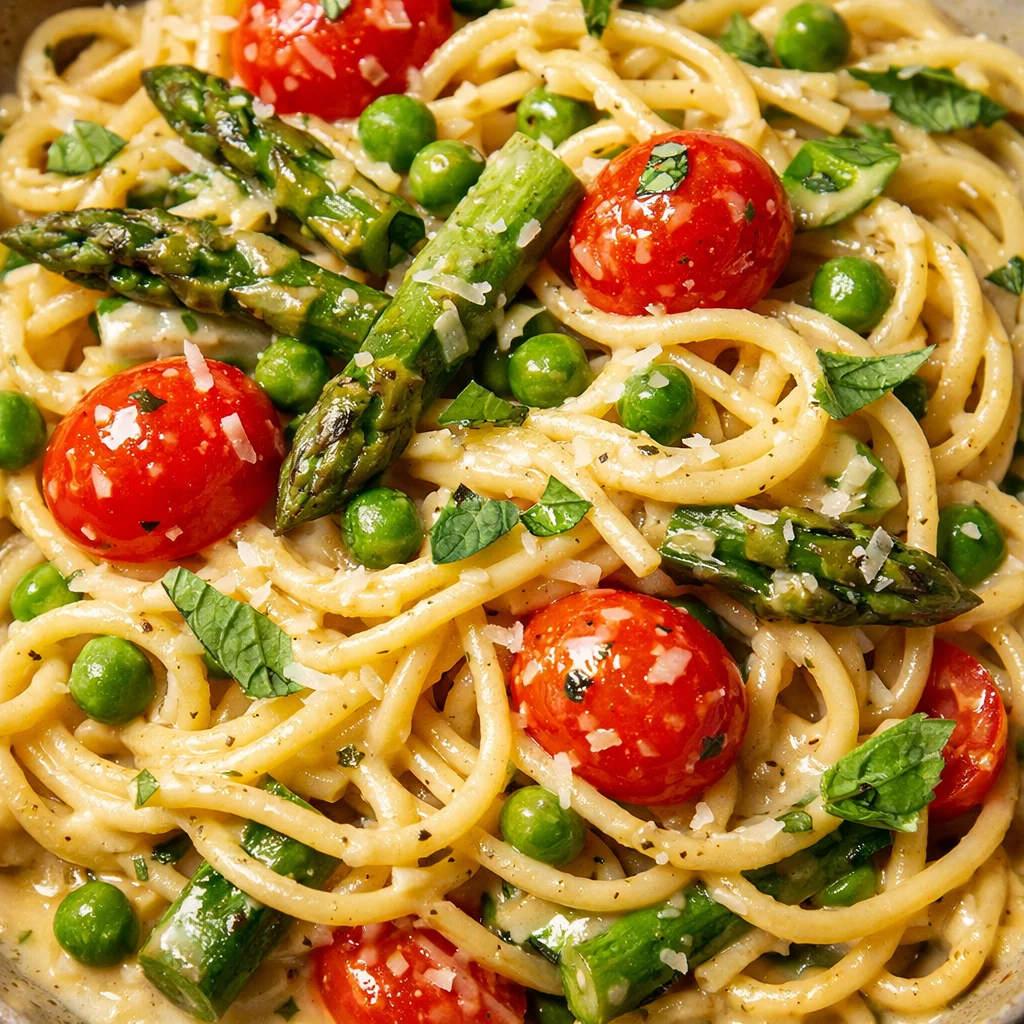
Ingredients
Method
- Cook the Pasta: First, bring a large pot of salted water to a rolling boil. Add your chosen pasta and cook according to package directions until it's al dente. Before draining, reserve about 1 cup of the starchy pasta water. Drain the pasta and set it aside. This reserved water is crucial for the sauce of your Spring Vegetable Pasta.
- Sauté Aromatics: Next, in a large skillet or Dutch oven, heat the olive oil over medium heat. Add the minced garlic and red pepper flakes (if using). Sauté for about 1 minute until fragrant, being careful not to burn the garlic.
- Add Vegetables: Now, add the trimmed asparagus pieces to the skillet. Cook for 3-5 minutes, stirring occasionally, until they are bright green and tender-crisp. Then, stir in the thawed frozen peas and halved cherry tomatoes. Cook for another 2-3 minutes, just until the tomatoes begin to soften slightly.
- Create the Sauce: Pour in the vegetable broth and bring it to a gentle simmer. Stir in the heavy cream and lemon zest. Let the sauce simmer for 2-3 minutes to slightly thicken.
- Combine and Finish: Add the cooked pasta to the skillet with the vegetables and sauce. Toss everything together thoroughly. Stir in the grated Parmesan cheese and fresh lemon juice. If the sauce seems too thick, add a splash of the reserved pasta water until it reaches your desired consistency.
- Season and Serve: Finally, stir in the fresh chopped basil. Taste and adjust seasoning with salt and freshly ground black pepper as needed. Serve your beautiful Spring Vegetable Pasta immediately, garnished with extra Parmesan cheese and basil, if desired. Enjoy this wonderful spring pasta!
Notes
Pro Tips for Success:
- Don't Overcook Your Veggies: Keep vegetables tender-crisp for vibrant flavor and texture. Asparagus should still have a slight bite.
- Reserved Pasta Water is Gold: This starchy liquid helps emulsify the sauce, making it cling beautifully to the pasta and veggies. Don't skip this step!
- Fresh Herbs Make a Difference: Fresh basil brightens the dish; add it at the very end to preserve its freshness and aromatic quality.
- Zest Your Lemon First: It’s easier to zest a whole lemon. The zest adds concentrated citrus flavor without extra liquid.
- Season as You Go: Taste and adjust salt and pepper throughout the cooking process, not just at the end.
- High-Quality Ingredients: Simple dishes shine with fresh, vibrant spring vegetables and good-quality pasta.
Storage & Reheating Tips:
- Storage: Once cooled, transfer any leftover pasta to an airtight container and store in the refrigerator for up to 3-4 days. Flavors often deepen overnight.
- Reheating: Stovetop (best): Place pasta in a skillet over medium-low heat. Add a splash of vegetable broth, water, milk, or cream to moisten the sauce. Stir gently until heated through.
- Microwave: For quicker reheating, microwave individual portions on a plate or bowl. Add 1-2 tablespoons of water or broth, cover loosely, and heat in 30-60 second intervals, stirring in between, until warm. Avoid overheating to prevent drying out the pasta and vegetables.