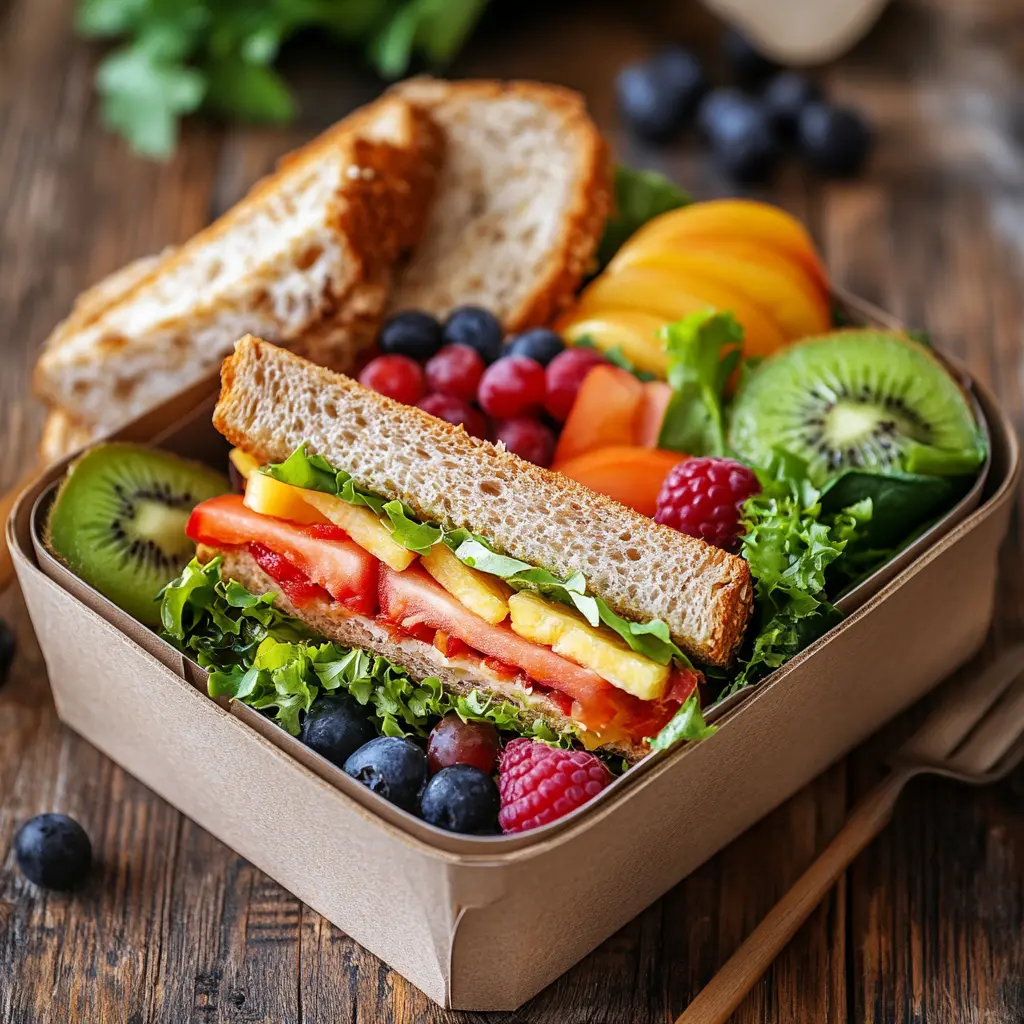
Ingredients
Method
- Determine appropriate serving sizes for all components to ensure portion control and nutritional balance.
- Prepare your chosen main dish, such as a sandwich, wrap, salad, or bento-style entree.
- Include complementary side dishes like fresh fruit, roasted vegetables, or a small pasta salad.
- Add a small snack for an energy boost, such as nuts, cheese cubes, or crackers.
- Select a small sweet treat for dessert, like a piece of fruit or dark chocolate.
- Include a beverage to complete the meal, such as water, juice, or tea.
- Use compartmentalized containers to separate items and maintain freshness, especially for wet ingredients like dressings (pack them on the side).
- Arrange colorful ingredients for visual appeal, adding garnishes like herbs or lemon wedges if desired.
- Place sturdy items like grains or proteins at the bottom of containers, with delicate items like greens or toppings on top.
- Wrap sandwiches or wraps individually in parchment paper to keep them intact and fresh.
- Store perishable items in the refrigerator until ready to pack for transport.
- For lunches requiring refrigeration during transport, use an insulated lunch bag with reusable ice packs to maintain a cool temperature.
- If preparing the night before, avoid assembling items with wet ingredients until the morning to prevent sogginess.
Notes
To keep your box lunch fresh and delicious, always use insulated containers with ice packs for perishable items. Store dressings and wet ingredients in separate containers and add them just before eating. Prioritize seasonal and local produce, and consider batch cooking ingredients like grains or proteins to save time. Embrace eco-friendly practices by using reusable containers, reducing food waste through portion control and creative use of leftovers, and choosing ethically sourced ingredients. Pack lunches the night before, but hold off on combining wet components until morning for optimal freshness.