Ingredients
Method
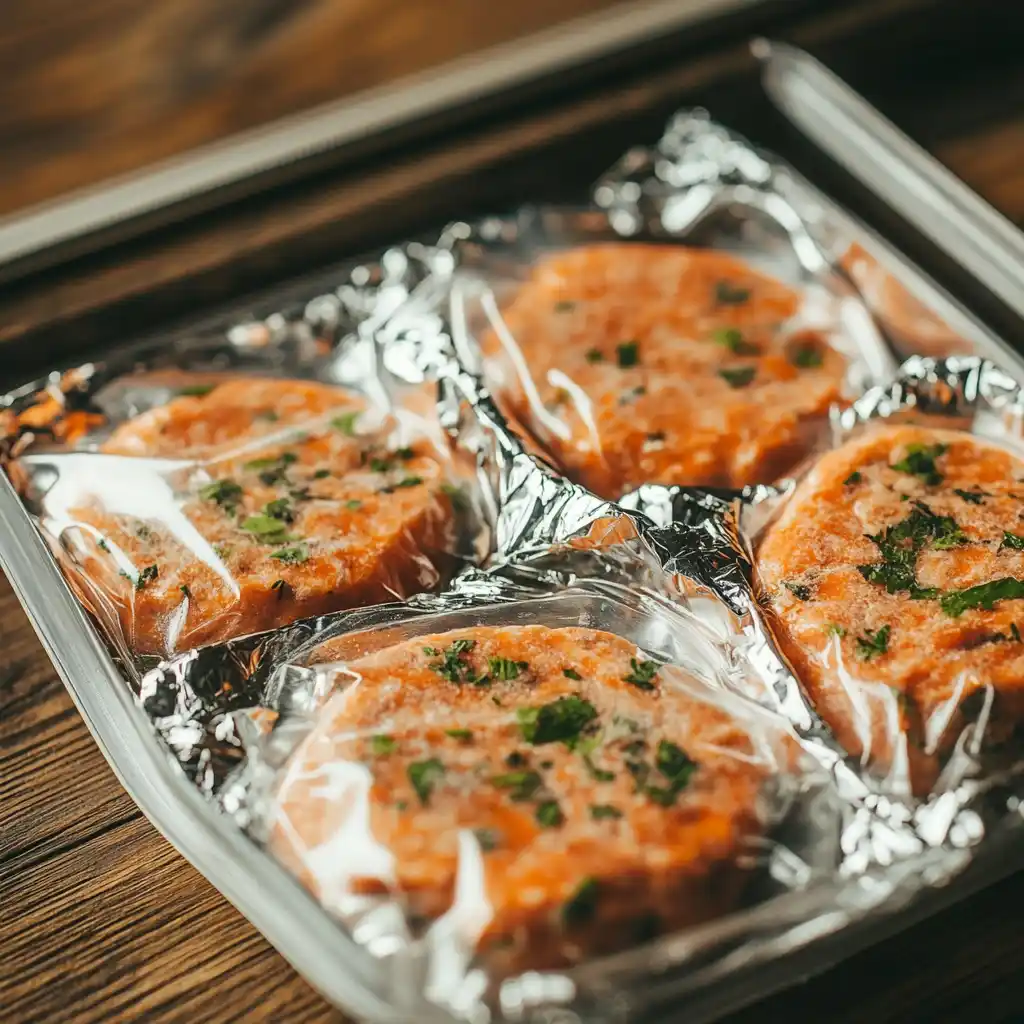
- **For Freezing Uncooked Salmon Patties:** Prepare your salmon mixture and form patties of your desired size. Press gently to ensure they hold together. Arrange the patties in a single layer on a baking sheet lined with parchment paper. Place the baking sheet in the freezer for 1-2 hours, or until the patties are firm to the touch. Remove the firm patties and wrap each one tightly in plastic wrap or aluminum foil. Place the wrapped patties in a resealable freezer bag or airtight container, removing as much air as possible to prevent freezer burn. Label and date the container or bag, then store in the freezer at 0°F (-18°C) or lower for up to 3 months.
- **For Freezing Cooked Salmon Patties:** Allow the cooked salmon patties to cool completely to room temperature. Freezing hot or warm patties can create condensation, leading to freezer burn. Wrap each patty tightly in plastic wrap or aluminum foil to lock in freshness and prevent sticking. Place the wrapped patties in a resealable freezer bag or airtight container, removing as much air as possible to keep them fresh. Label and date the container or bag, then store in the freezer at 0°F (-18°C) or lower for up to 3 months.
- **Best Practices - Prevent Freezer Burn:** Wrap each patty tightly in plastic wrap or aluminum foil. Place wrapped patties in a freezer bag or airtight container for added protection. Remove as much air as possible from the freezer bag, using a vacuum sealer if available.
- **Best Practices - Freeze in Single Layers:** Pre-freeze uncooked patties on a baking sheet before storing them together to prevent sticking and maintain shape. If stacking is necessary, place parchment paper between the patties.
- **Best Practices - Label Clearly:** Write the freezing date and contents ('Uncooked Salmon Patties' or 'Cooked Salmon Patties') on the container or bag. Use rotation by placing older patties in the front of the freezer to use them first.
- **Best Practices - Do Not Refreeze Thawed Patties:** Once thawed, do not refreeze salmon patties, as this can negatively impact their texture and safety.
- **Thawing Frozen Salmon Patties (Recommended):** * **Refrigerator Thaw:** Remove frozen patties from the freezer and any plastic wrap or foil. Place them on a plate or in a covered container and leave in the refrigerator overnight or for 6-8 hours to thaw completely. * **Quick Thaw Method:** Keep the patties wrapped and place them in a resealable plastic bag. Submerge the bag in cold water, changing the water every 30 minutes. Thaw the patties within 1-2 hours, depending on their size and thickness.
- **Cooking or Reheating Thawed Salmon Patties:** * **Uncooked Salmon Patties:** Cook thawed uncooked patties as you normally would (pan-searing, baking, air frying, or grilling). * **Cooked Salmon Patties:** * **In the Oven:** Preheat oven to 375°F (190°C). Place patties on a baking sheet and heat for 10–15 minutes until warmed through. * **In the Air Fryer:** Set air fryer to 350°F (175°C). Heat patties for 7–10 minutes, flipping halfway for even warming. * **On the Stovetop:** Heat a nonstick skillet over medium heat with a small amount of oil. Cook patties for 2–3 minutes per side until heated through.
- **Cooking Frozen Salmon Patties Without Thawing:** * **For Uncooked Patties:** Cook directly from frozen by adding 5–7 extra minutes to your usual baking, pan-searing, or air frying time. * **For Cooked Patties:** Heat frozen cooked patties in the oven or air fryer for 15–20 minutes at 350°F (175°C).
- **Avoid These Common Mistakes:** Do not thaw salmon patties at room temperature, as this can encourage bacterial growth. Do not overheat patties when reheating, as this can dry them out.
Notes
Uncooked and cooked salmon patties can be stored in the freezer for up to 3 months. After this time, they remain safe to eat but may lose some flavor and texture.
Freezing hot or warm patties can create condensation, leading to freezer burn.
Avoid heavy seasoning before freezing. Add stronger flavors like lemon juice or sauces after cooking.
Freezing salmon patties is an excellent way to save time, reduce waste, and ensure you always have a nutritious option on hand.