Ingredients
Method
- Prep Your Pans: Preheat your oven to 350°F (175°C). Grease and flour two 8-inch round cake pans. For extra assurance, line the bottoms with parchment paper. This prevents sticking and ensures a clean release for your beautiful homemade coconut cake.
- Combine Dry Ingredients: In a large bowl, whisk together the all-purpose flour, granulated sugar, baking powder, and salt. Make sure these dry ingredients are thoroughly combined. This even distribution helps the cake rise properly.
- Cream Butter and Eggs: In a separate large mixing bowl, using an electric mixer, cream the softened unsalted butter until light and fluffy, about 2 minutes. Gradually beat in the large eggs, one at a time, mixing well after each addition. Scrape down the sides of the bowl as needed to ensure everything combines evenly. Then, mix in the vanilla extract.
- Alternate Wet and Dry: With the mixer on low speed, gradually add the dry ingredient mixture to the wet ingredients, alternating with the full-fat canned coconut milk. Begin and end with the dry ingredients (flour, coconut milk, flour, coconut milk, flour). Mix until just combined. Do not overmix; overmixing develops gluten and can lead to a tough cake, and we want a fluffy coconut cake!
- Fold in Coconut: Gently fold in the 1 cup of unsweetened shredded coconut using a spatula. This ensures the coconut is evenly distributed throughout your delicious coconut cake recipe.
- Divide and Bake: Divide the cake batter evenly between the two prepared 8-inch round cake pans. Smooth the tops with a spatula. Bake for 28-32 minutes, or until a wooden skewer inserted into the center of the cakes comes out clean.
- Cool the Cakes: Once baked, remove the cakes from the oven. Let them cool in their pans on a wire rack for 10-15 minutes. This allows the cakes to set properly. After this initial cooling, carefully invert the cakes onto the wire rack, remove the pans and parchment paper, and let them cool completely before frosting. Cold cakes are much easier to frost and handle, making your best coconut cake recipe experience smoother.
- Cream Butter (Frosting): In a large mixing bowl, cream the softened unsalted butter with an electric mixer until it's light and fluffy, about 2-3 minutes.
- Add Powdered Sugar (Frosting): Gradually add the powdered sugar, about 1 cup at a time, mixing on low speed until combined. Once all the powdered sugar is incorporated, increase the speed to medium-high and beat until smooth.
- Add Liquids (Frosting): Pour in the ¼ cup of full-fat canned coconut milk and the 1 teaspoon of vanilla extract. Beat on medium-high speed for another 2-3 minutes until the frosting is light, fluffy, and smooth. If the frosting is too thick, add a tiny bit more coconut milk (a teaspoon at a time). If it’s too thin, add more powdered sugar. This ensures a perfect consistency for your moist coconut cake.
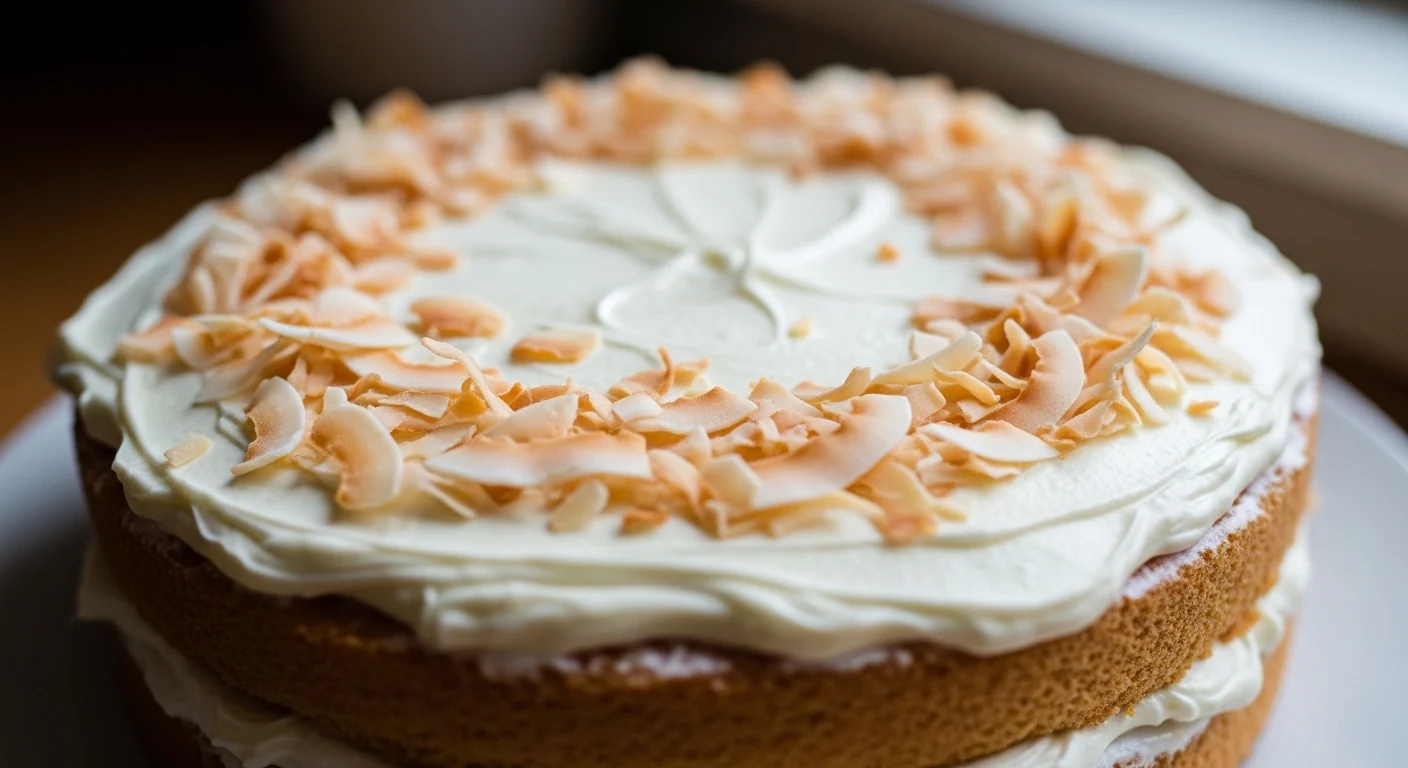
- Assemble and Frost: Once the cakes are completely cool, place one cake layer on your serving plate or cake stand. Spread a generous layer of coconut buttercream frosting evenly over the top. Place the second cake layer on top. Frost the top and sides of the entire cake with the remaining buttercream.
- Garnish: Finally, gently press the additional 1-2 cups of unsweetened shredded coconut onto the sides and top of the frosted coconut cake recipe. This adds texture and that irresistible coconut appeal.
Notes
Pro Tips for Success:
Always use room temperature butter and eggs. They emulsify better, creating a smoother, more uniform batter and a lighter, fluffier cake texture. Take them out of the fridge at least an hour before you start baking.
Measure flour correctly: Spoon the flour into the measuring cup and then level it off with a straight edge (like a knife). This prevents overpacking and using too much flour, which can lead to a dense, dry cake.
Do not overmix: Mix the batter until just combined. Overmixing develops gluten, resulting in a tough, chewy cake.
Use full-fat coconut milk: For both the cake and the frosting, full-fat canned coconut milk is essential. It provides richness, moisture, and authentic coconut flavor. Shake the can well before opening.
Cool completely: Resist the urge to frost warm cakes. Warm cakes will melt your frosting. Ensure your cake layers are completely cool to the touch before frosting.
Level your cakes: If your cake layers dome slightly, use a serrated knife to level the tops once they are cool. This creates even layers and a professional-looking finished cake.
Parchment paper is your friend: Always line the bottoms of your cake pans with parchment paper after greasing and flouring. It guarantees an easy release.
Taste your frosting: As you add powdered sugar to the buttercream, taste it frequently. Adjust the sweetness to your preference.
Storage & Reheating Tips:
At Room Temperature: If your kitchen is cool (below 72°F/22°C), store the frosted cake at room temperature for up to 2 days, covered loosely.
In the Refrigerator: For longer storage, or if your kitchen is warm, refrigerate the frosted cake in an airtight container for up to 5 days.
Bringing to Room Temperature: For the best flavor and texture, remove refrigerated cake from the fridge about 30-60 minutes before serving.
Freezing Cake Layers (Unfrosted): Freeze unfrosted cake layers for up to 2 months. Wrap tightly in plastic wrap, then foil. Thaw overnight in the refrigerator.
Freezing Frosted Cake: For short-term freezing (up to 2 weeks), flash freeze the whole cake uncovered until firm. Then, wrap tightly in plastic wrap and foil. Thaw overnight in the refrigerator.
What to Serve With This Coconut Cake Recipe:
Fresh Berries: A vibrant mix like raspberries, blueberries, or sliced strawberries.
Tropical Fruit Salad: Featuring mango, pineapple, and kiwi.
A Scoop of Vanilla Ice Cream: A classic pairing for a creamy, cool contrast.
Warm Raspberry Coulis: Drizzled over the plate for an extra layer of flavor and elegance.
Aromatic Coffee or Tea: A rich, dark roast coffee or a fragrant herbal tea.
Light Whipped Cream: A dollop of unsweetened or lightly sweetened whipped cream.
Lime or Passion Fruit Sorbet: For a truly refreshing finish.
FAQs:
Sweetened vs. Unsweetened Coconut: Unsweetened is highly recommended for optimal flavor balance. Sweetened will significantly increase sweetness.
Preventing Dryness: Do not overmix batter, measure flour accurately (spoon and level), avoid overbaking, use full-fat coconut milk and room temperature ingredients.
Make Ahead: Cake layers can be baked 2-3 days in advance (wrapped tightly) or frozen up to 2 months (unfrosted). Frosting can be made the day before and re-whipped.