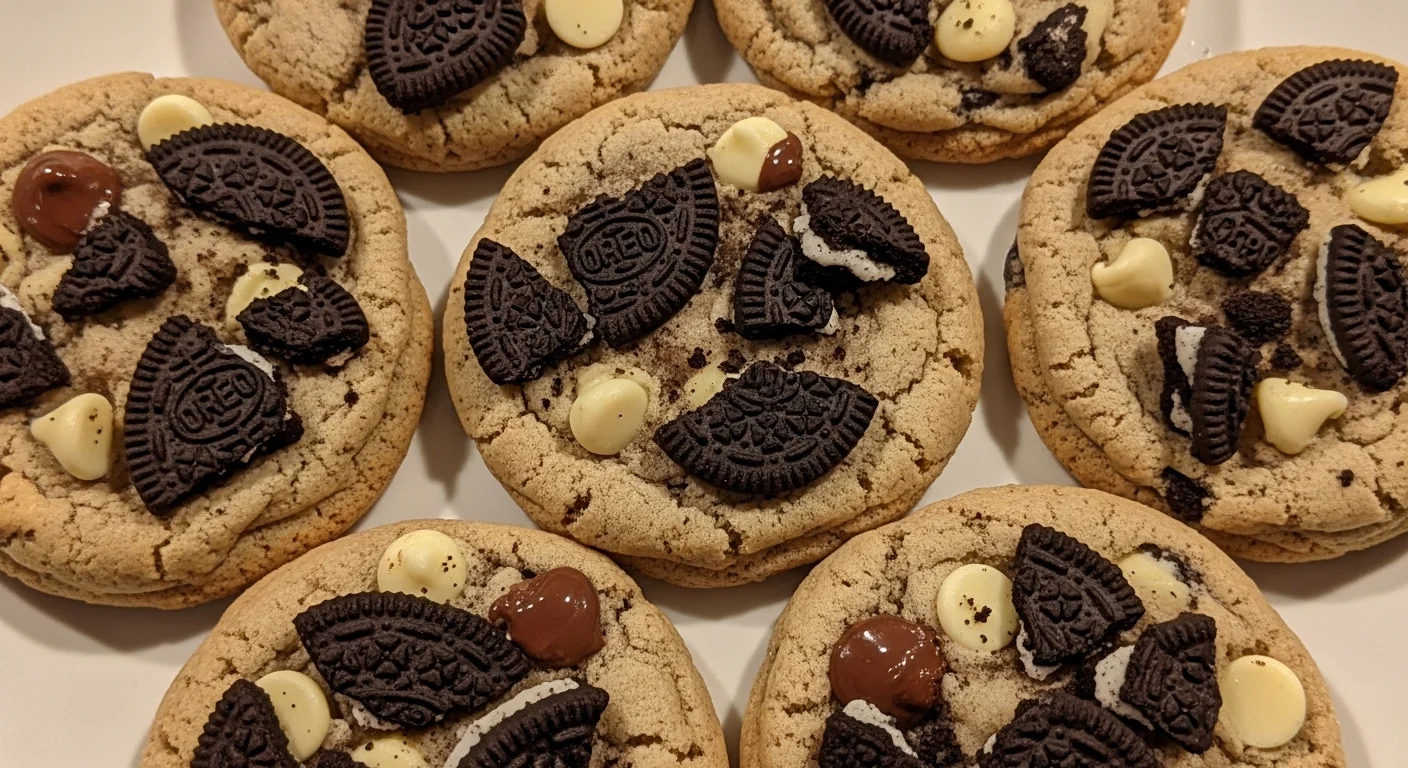
Ingredients
Method
- Preheat your oven to 375°F (190°C). Line a baking sheet with parchment paper or a silicone baking mat.
- Place the Oreo cookies in a large Ziploc bag. Seal it tightly, removing as much air as possible. Use a rolling pin or the bottom of a heavy glass to crush the cookies into varying sizes – some crumbs, some larger chunks.
- In a medium bowl, whisk together the all-purpose flour, baking soda, and salt. Set aside.
- In a large mixing bowl, using an electric mixer, cream together the softened unsalted butter, granulated sugar, and light brown sugar until light and fluffy. This usually takes about 2-3 minutes.
- Beat in the large eggs, one at a time, ensuring each is fully incorporated before adding the next. Stir in the vanilla extract. Scrape down the sides of the bowl as needed to make sure everything is well combined.
- Gradually add the dry ingredient mixture to the wet ingredients, mixing on low speed until just combined. Be careful not to overmix.
- Gently fold in the crushed Oreo cookies and white chocolate chips (if using) with a spatula. Distribute the chunks evenly throughout the dough.
- Drop rounded tablespoons of cookie dough onto the prepared baking sheet, leaving about 2 inches between each cookie. A cookie scoop works wonders for consistent sizing.
- Bake for 9-11 minutes, or until the edges are golden brown and the centers are just set. Do not overbake! The cookies will continue to cook slightly as they cool, ensuring soft and chewy cookies and cream cookies.
- Let the cookies cool on the baking sheet for 5 minutes before transferring them to a wire rack to cool completely. Enjoy your homemade cookies and cream cookies warm or at room temperature!
Notes
Pro Tips for Success:
- Always use room temperature butter and eggs. This ensures smooth creaming and even baking. Cold ingredients can lead to a lumpy batter and less desirable texture.
- Measure your flour correctly. Spoon flour into the measuring cup and level it off. Scooping directly can compact flour, leading to too much flour and dry cookies.
- Avoid overmixing the dough. Mix only until flour streaks disappear; overmixing develops gluten, resulting in tough cookies.
- For perfectly round cookies, roll your dough into balls before baking. For aesthetics, press extra Oreo chunks and white chocolate chips onto the tops of dough balls before baking.
- Do not overbake! Cookies are best when slightly underbaked; they will continue to cook as they cool, ensuring a soft and chewy texture.
Storage & Reheating Tips:
- Store completely cooled cookies in an airtight container at room temperature for up to 3-4 days. For extra softness, place a slice of bread in the container.
- For longer storage, freeze cooled cookies by placing them in a single layer on a baking sheet until firm (1-2 hours). Then transfer to a freezer-safe bag or container, separating layers with parchment paper. They will stay fresh for up to 2-3 months.
- To enjoy frozen cookies, thaw at room temperature for an hour or microwave for 10-15 seconds for a warm treat.
- You can also freeze raw cookie dough: Form dough into balls, freeze on a parchment-lined baking sheet, then transfer to a freezer bag. Bake directly from frozen, adding an extra minute or two to baking time.
FAQs:
- To prevent spreading: Ensure butter is softened but still cool to the touch (not melted), chill dough for at least 30 minutes, verify oven temperature is accurate, and avoid over-creaming butter and sugars.
- Making dough ahead: Prepare dough, cover tightly, and refrigerate for up to 2-3 days. Chilling enhances flavor and chewiness. Let dough sit at room temperature for 15-20 minutes to soften before scooping/baking, adding an extra minute or two to baking time.
- Best way to crush Oreos: Place in a large, sturdy Ziploc bag, remove excess air, then use a rolling pin or heavy pan to bash and roll until cookies are a mix of fine crumbs and larger chunks. Avoid food processor to retain chunky texture.
- Gluten-free options: Substitute all-purpose flour with a 1:1 gluten-free baking flour blend (containing xanthan gum) and use gluten-free sandwich cookies.
- Why cookies are dry: The most common cause is overbaking (cookies should look slightly underbaked in the center when removed). Other factors include too much flour (ensure accurate measuring by spooning/leveling) or too little butter/eggs.