Ingredients
Method
- Preheat the oven to 325°F (165°C).
- In a small skillet, heat 1 tablespoon of butter over medium heat. Add the finely minced shallot and garlic. Cook until softened and fragrant, about 2 minutes.
- In a large bowl, combine the drained and patted dry crab meat, the sautéed shallot and garlic, 2 tablespoons of grated Parmesan cheese, 1 tablespoon of finely chopped parsley or chives, a pinch of paprika, salt, and white pepper. Gently mix to avoid breaking up the crab meat too much. Set aside.
- In a medium bowl, whisk together the 4 egg yolks and 1 cup of heavy cream until smooth.
- Slowly fold the crab mixture into the custard base, ensuring even distribution without overmixing.
- Lightly grease 4–6 small ramekins with butter to prevent sticking.
- Divide the crab mixture evenly among the ramekins, leaving a small gap at the top to prevent overflow during baking.
- Place the filled ramekins in a baking dish. Add hot water to the dish until it reaches halfway up the sides of the ramekins, creating a water bath.
- Bake the ramekins in the water bath for 30–40 minutes, or until the custard is set but still slightly jiggly in the center.
- Remove the ramekins from the water bath and let them cool to room temperature for about 10 minutes.
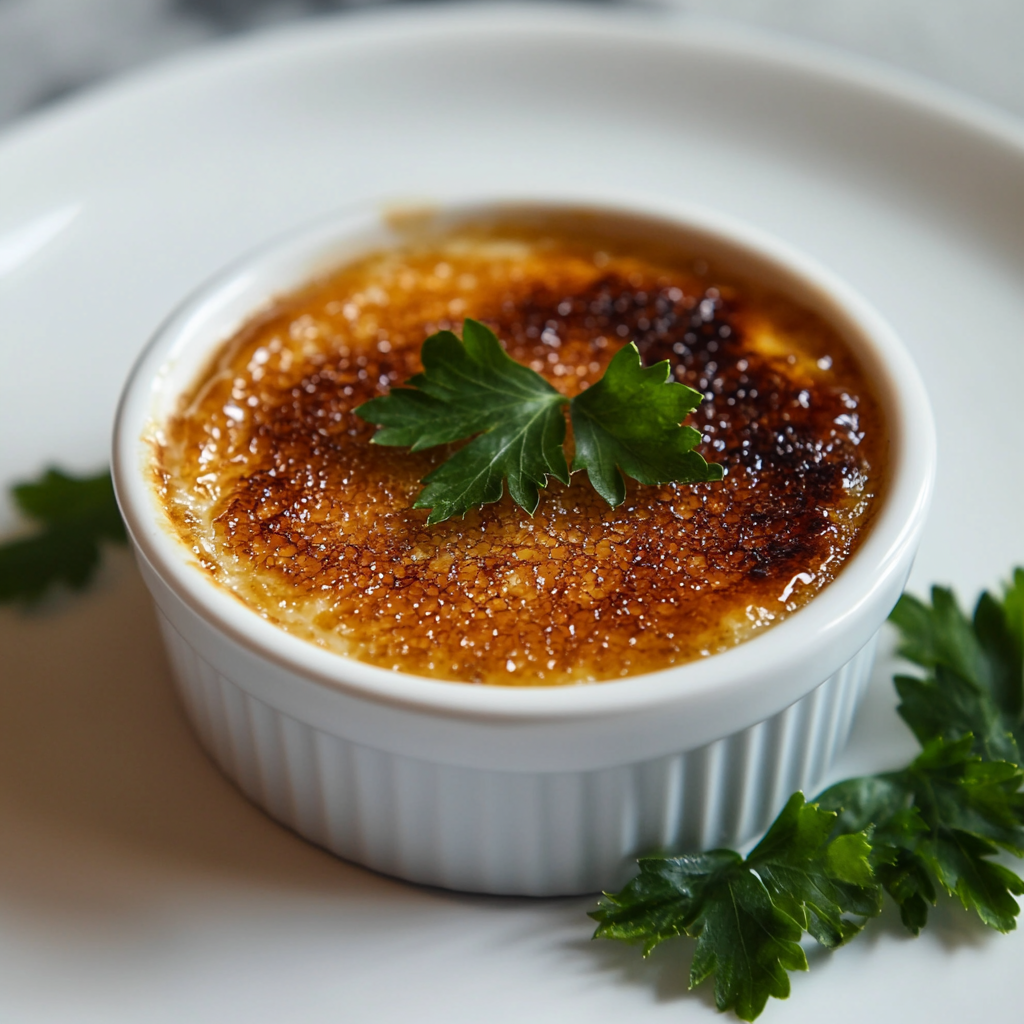
- Evenly sprinkle a thin layer of sugar (about 1 teaspoon per ramekin) over the surface of each custard.
- Use a culinary torch to caramelize the sugar until it forms a golden, glassy crust. If you don’t have a torch, place the ramekins under the broiler for 1–2 minutes, watching closely to avoid burning.
Notes
Drain and gently pat the crab meat dry with a paper towel to remove excess moisture before mixing it into the custard.
Grease individual ramekins lightly with butter and place them in a baking dish. The water bath helps the custard set evenly without curdling.
Use fresh lump crab meat for natural sweetness and tender texture. Avoid over-seasoning. Season salt and spices sparingly as Parmesan cheese and sugar topping contribute flavor.
Bring eggs and cream to room temperature before whisking for a smoother custard. For an ultra-smooth texture, strain the custard through a fine mesh sieve before combining.
Bake the custard until just set with a slight jiggle in the center to avoid a grainy or rubbery texture. Ensure sugar is evenly spread before torching to achieve a uniform crust. A thin layer of superfine sugar is ideal.
Hold the torch a few inches above the surface and move it in circular motions to avoid burning. When broiling, watch closely as caramelization happens quickly.
Garnish with fresh herbs like chopped parsley or chives. Serve with thinly sliced baguette or crackers, or a crisp green salad. A crisp white wine like Sauvignon Blanc or Chardonnay pairs well.
Store cooled custards covered in plastic wrap in the refrigerator for up to 2 days. Add the sugar topping and caramelize just before serving. Avoid reheating the custard in the oven as it can alter the texture.