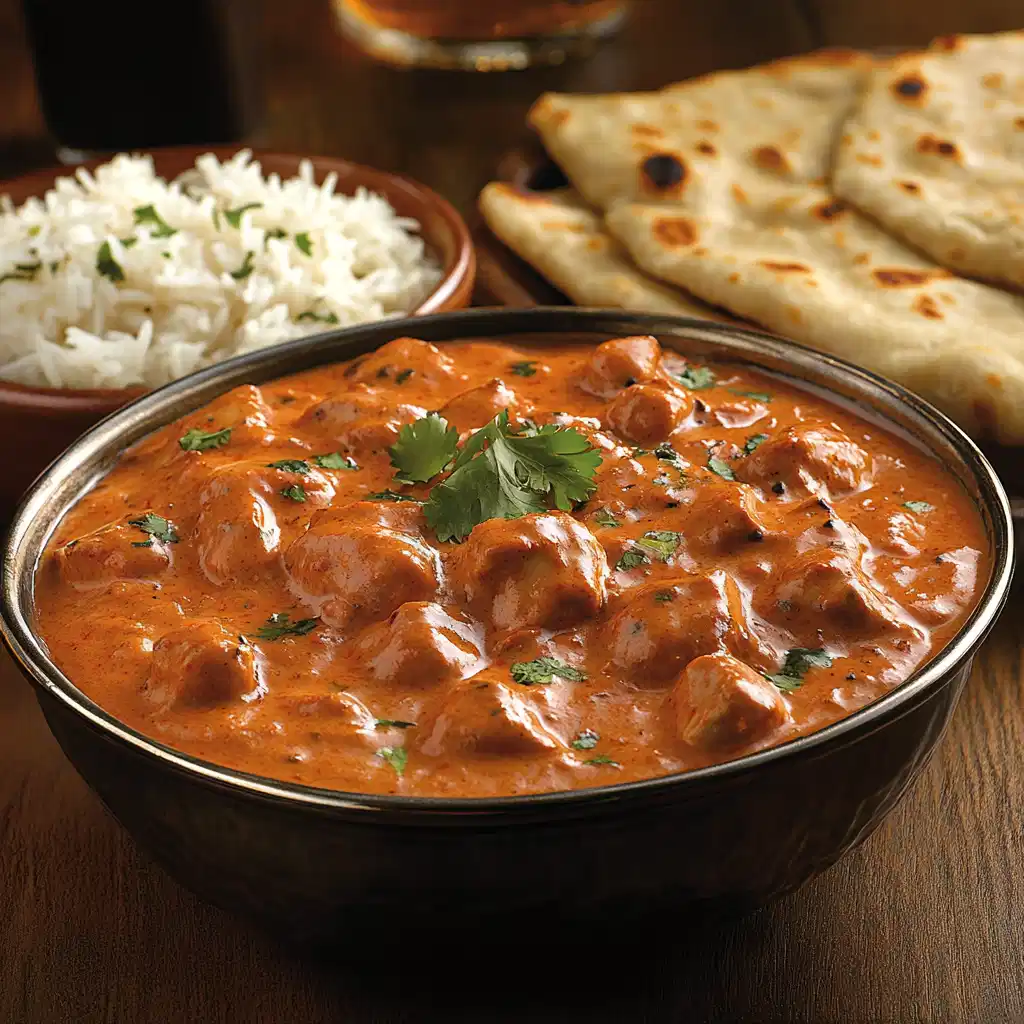
Ingredients
Method
- Marinate the Chicken: In a large bowl, combine the cubed chicken, Greek yogurt, 1 tablespoon ginger-garlic paste, 1/2 tablespoon garam masala, 1/2 teaspoon turmeric, 1/2 teaspoon cumin, 1/2 teaspoon coriander, lemon juice, 1/2 teaspoon salt, and 1/4 teaspoon black pepper. Mix everything thoroughly, ensuring the chicken is well coated. Cover the bowl and refrigerate for at least 30 minutes, or ideally 2-4 hours, or even overnight for maximum flavor and tenderness.
- Sear the Chicken: Heat 1 tablespoon of olive oil in a large, heavy-bottomed pot or Dutch oven over medium-high heat. Once hot, add the marinated chicken in a single layer, working in batches if necessary to avoid overcrowding the pan. Cook for 3-4 minutes per side, until browned and slightly charred. The chicken does not need to be cooked through at this point. Remove the seared chicken from the pot and set it aside.
- Sauté the Aromatics: Reduce the heat to medium. Add the remaining 1 tablespoon of olive oil to the same pot. Add the chopped onion and sauté for 5-7 minutes until softened and translucent. Then, add the remaining 1 tablespoon ginger-garlic paste and cook for another minute until fragrant, stirring constantly to prevent burning.
- Build the Sauce: Stir in the remaining 1/2 tablespoon garam masala, 1/2 teaspoon turmeric, 1/2 teaspoon cumin, and 1/2 teaspoon coriander. Cook for 30 seconds, stirring constantly, to toast the spices.
- Add Tomatoes and Simmer: Pour in the crushed tomatoes and tomato paste. Stir well to combine. Add the remaining 1/2 teaspoon salt, 1/4 teaspoon black pepper, and the optional pinch of sugar if using. Bring the sauce to a gentle simmer, then reduce the heat to low, cover, and let it cook for at least 15-20 minutes, allowing the flavors to meld beautifully. Stir occasionally to prevent sticking.
- Combine and Finish: Return the seared chicken and any accumulated juices to the pot with the simmering sauce. Stir everything together. Cook for another 5-10 minutes, or until the chicken is cooked through and tender.
- Stir in Cream: Remove the pot from the heat. Gently stir in the heavy cream (or your chosen lighter alternative). Stir until the sauce is creamy and evenly colored. Do not boil the sauce after adding the cream, as it can curdle.
- Garnish and Serve: Garnish generously with fresh chopped cilantro. Serve immediately with your favorite accompaniments.
Notes
Marination is Key: Do not skip the marination step for the chicken. The yogurt and lemon juice really tenderize the chicken, making it incredibly juicy. Longer marination (up to 24 hours) yields the best results. This allows the flavors to deeply penetrate the meat, meaning you won’t need extra heavy sauces to mask underdeveloped flavors.
Don't Overcrowd the Pan: When searing the chicken, cook it in batches. Overcrowding the pan lowers the temperature and steams the chicken instead of browning it. Browning creates those delicious caramelized bits that add so much depth to the final dish, without adding extra calories.
Toast Your Spices: Briefly cooking the ground spices in oil before adding the liquids (after sautéing the onions and ginger-garlic) truly unlocks their full aroma and flavor. This makes a huge difference in the complexity of the sauce.
Simmer for Flavor: Allow the tomato sauce to simmer for at least 15-20 minutes. This gives the flavors time to meld and deepen, preventing a raw tomato taste. Patience here pays off in a richer, more cohesive sauce.
Adjust Cream to Taste and Calories: The amount of heavy cream directly impacts the richness and the calorie count. Start with a smaller amount (say, 1/4 cup) and add more until you reach your desired consistency and flavor. If you're particularly concerned about How Many Calories in Chicken Tikka Masala? The Shocking Truth Revealed!, opt for half-and-half or even a plant-based alternative.
Fresh is Best: Use fresh ginger and garlic, ideally grated or minced yourself, for the most vibrant flavor. Pre-made ginger-garlic paste works in a pinch, but fresh always tastes better. Similarly, fresh cilantro for garnish makes a big difference.
Taste and Adjust: Always taste your sauce before serving. You might need a little more salt, a squeeze of lemon juice, or that tiny pinch of sugar to balance the flavors. Your palate knows best!
Batch Cooking Bonus: This recipe scales beautifully! Double it up and freeze portions for quick, healthy weeknight meals. Freezing does not impact the calories in Chicken Tikka Masala.
Storage: Once cooled completely, transfer any leftover Chicken Tikka Masala to an airtight container. You can store it in the refrigerator for up to 3-4 days. For longer storage, you can freeze it for up to 2-3 months. Portioning it into individual containers before freezing makes for super easy meal planning. Freezing cooked Chicken Tikka Masala does not alter its calorie count.
Reheating (Refrigerator): For refrigerated leftovers, gently reheat the Chicken Tikka Masala on the stovetop over medium-low heat. You might need to add a splash of water or chicken broth to loosen the sauce as it can thicken in the fridge. Stir occasionally until it is heated through. Alternatively, you can microwave individual portions in 1-minute intervals, stirring in between, until hot.
Reheating (Freezer): If reheating from frozen, transfer the container to the refrigerator overnight to thaw. Then, reheat using the stovetop or microwave method as described above. You can also reheat directly from frozen on the stovetop, but it will take longer and require more frequent stirring and liquid additions. Ensure the chicken reaches an internal temperature of 165°F (74°C) for safe consumption.