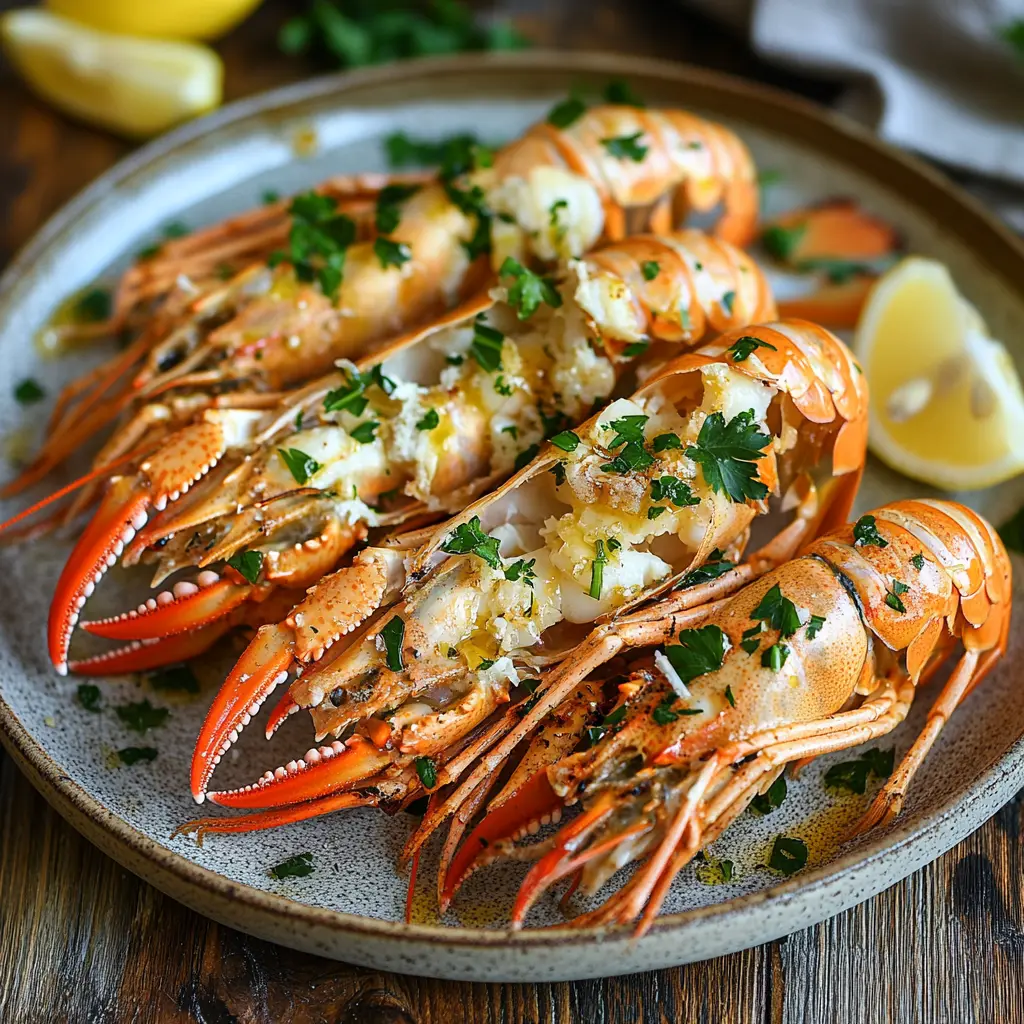
Ingredients
Method
- Choose Fresh Langoustines: Look for vibrant orange-pink shells, clear and shiny eyes, an intact body, and a mild sea aroma. They should feel firm and slightly moist. Purchase from trusted suppliers, ideally during peak season (May-September). If frozen, ensure vacuum-sealed packaging without ice crystals and labeled "flash-frozen."
- Handle and Transport: Keep langoustines chilled during transport and plan to cook them the same day, or store in the refrigerator for up to 1-2 days.
- Rinse Thoroughly: Place langoustines in a colander and rinse under cold running water, gently rubbing shells to remove sand or debris. Drain completely.
- Decide on Preparation: Decide whether to cook them whole or peeled. For whole, remove visible dirt. For peeled, proceed to remove head and shell.
- Remove the Head (if peeling/splitting): Hold the langoustine firmly, one hand on the body, one on the head. Twist gently until the head detaches. Save for stock or discard.
- Peel the Shell (if peeling/splitting): Hold the tail firmly. Use fingers or kitchen shears to crack the shell along the underside and gently peel it away from the tail meat, working from top to bottom.
- Remove the Vein (if peeling/splitting): Locate the black vein along the back of the tail meat. Use a small knife or skewer to lift and pull it out. Rinse the tail meat under cold water.
- Clean Claws (Optional): Use a seafood cracker or kitchen shears to break open claws and extract meat with a skewer or pick.
- Split Langoustines (Optional, for grilling/broiling): Lay the langoustine flat on a cutting board, back facing upward. Secure it with one hand.
- Cut Lengthwise: Position a sharp chef’s knife at the center of the head, pointing toward the tail, and press down firmly to slice through, splitting the langoustine into two halves. Alternatively, use kitchen shears to cut along the underside from head to tail.
- Devein After Splitting: After splitting, remove any visible black vein from the exposed meat using the tip of a knife or a skewer.
- Prepare for Cooking: Season the exposed meat generously with olive oil, minced garlic, salt, and pepper. Add fresh herbs like parsley, or optional garnishes like chili flakes, paprika, or lemon zest.
- Cook Using Desired Method: Choose one of the following methods: * Grilling: Preheat grill to medium-high. Place langoustines flesh-side down. Cook 2-3 minutes per side until shells are bright orange and flesh is opaque. * Boiling: Bring salted water to a boil. Add langoustines, reduce to gentle boil. Cook 2-3 minutes. * Sautéing: Heat olive oil/butter in skillet over medium heat. Sauté garlic 1 minute. Add peeled tails, cook 2-3 minutes until opaque. * Steaming: Bring water to boil in steamer. Place langoustines in basket. Steam 4-5 minutes until shells are bright orange and flesh is opaque. * Broiling: Preheat broiler to high. Place split langoustines on baking sheet, flesh-side up. Spread garlic butter, sprinkle paprika (optional). Broil 4-5 minutes until golden and bubbly.
- Serve Immediately: Garnish and serve the cooked langoustines.
Notes
Don’t overcook langoustines, as they cook quickly and can become rubbery.
Season lightly to allow their natural sweetness to shine through with minimal additions like garlic, olive oil, and lemon.
Save the shells and heads to make a rich seafood stock or bisque.
Always ensure a sharp knife or kitchen shears are used for splitting to achieve clean cuts and avoid damaging the delicate meat.
Work over a clean surface or cutting board to contain any liquids during the cleaning process.
When handling, be gentle as langoustine meat is delicate.
For easier and safer cutting, stabilize the langoustine on the cutting board with a damp kitchen towel underneath.