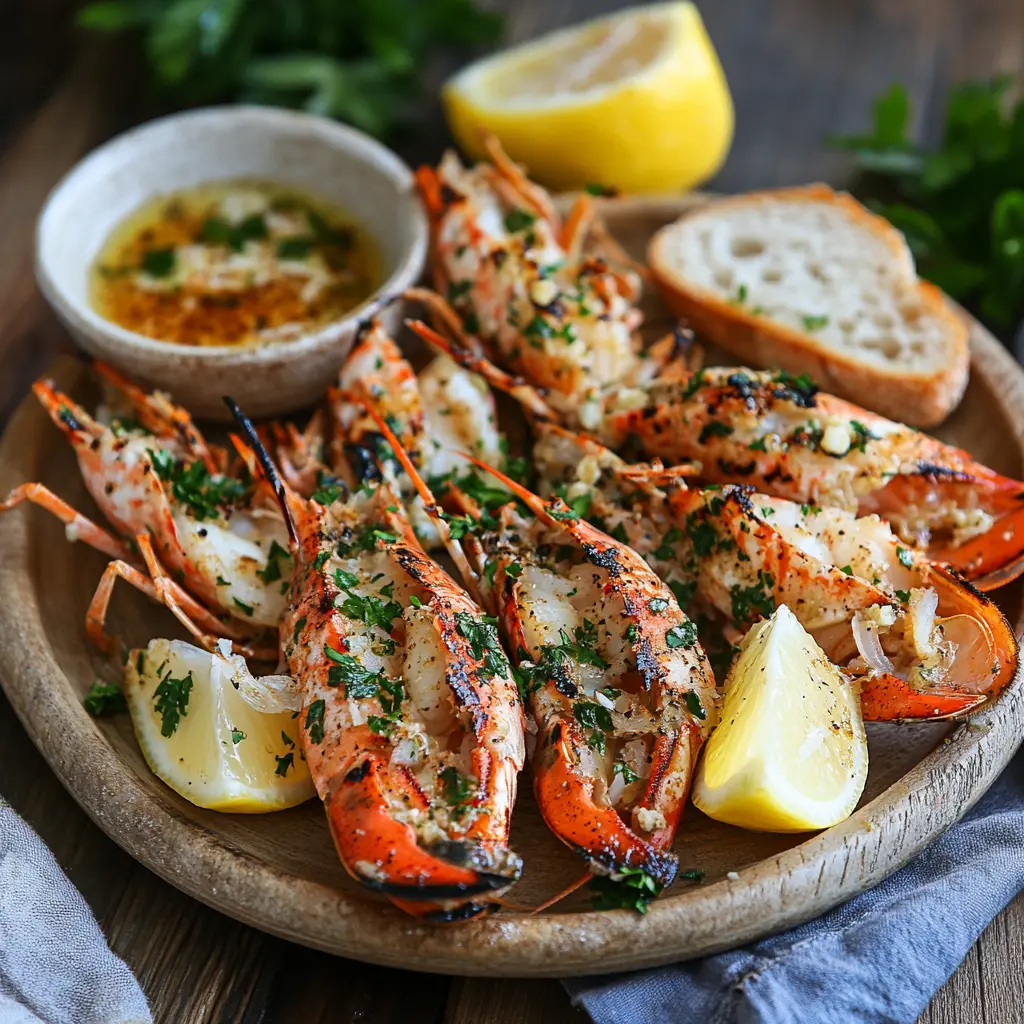
Ingredients
Method
- Prepare the Langoustines: If using whole langoustines, split them in half lengthwise with a sharp knife. If using tails, leave them whole.
- Make the Garlic Butter: In a small bowl, mix melted butter, olive oil, minced garlic, and a pinch of salt and pepper.
- Preheat the Grill: Set your grill or grill pan to medium-high heat. Lightly oil the grates to prevent sticking.
- Grill the Langoustines: Brush the langoustines generously with the garlic butter mixture. Place them flesh-side down on the grill and cook for 2–3 minutes until lightly charred. Flip and cook for an additional 2–3 minutes until the shells turn bright orange and the meat is opaque.
- Add Finishing Touches: Squeeze fresh lemon juice over the grilled langoustines and sprinkle with chopped parsley.
- Serve and Enjoy: Arrange the langoustines on a platter, garnish with lemon wedges, and serve immediately with crusty bread or a side salad.
Notes
Keep It Simple to Highlight Their Natural Flavor: Use minimal ingredients like olive oil, garlic, butter, and lemon.
Avoid Overcooking: Langoustine meat cooks very quickly; overcooking makes it rubbery. Grill for 2–3 minutes per side.
Use High Heat for Quick Cooking: Ensures juices are sealed in and creates a caramelized exterior.
Season Before and After Cooking: Enhances flavor penetration.
Use the Shells for Extra Flavor: Save shells for rich stocks, soups, or sauces.
Choose the Right Cooking Method for the Occasion: Grilling for smoky flavor, boiling for salads, sautéing for quick dishes, baking for gratins.
Handle with Care: Langoustines are delicate; use sharp shears and handle gently.
Pair Them with Complementary Flavors: Herbs, citrus, garlic, butter, and light spices.
Defrost Frozen Langoustines Properly: Thaw in refrigerator overnight or under cold running water.
Plate Elegantly: Arrange neatly with garnishes for a gourmet look.
Experiment with Regional Recipes: Try Italian Scampi alla Griglia, French Bouillabaisse, or Langoustine Tempura.