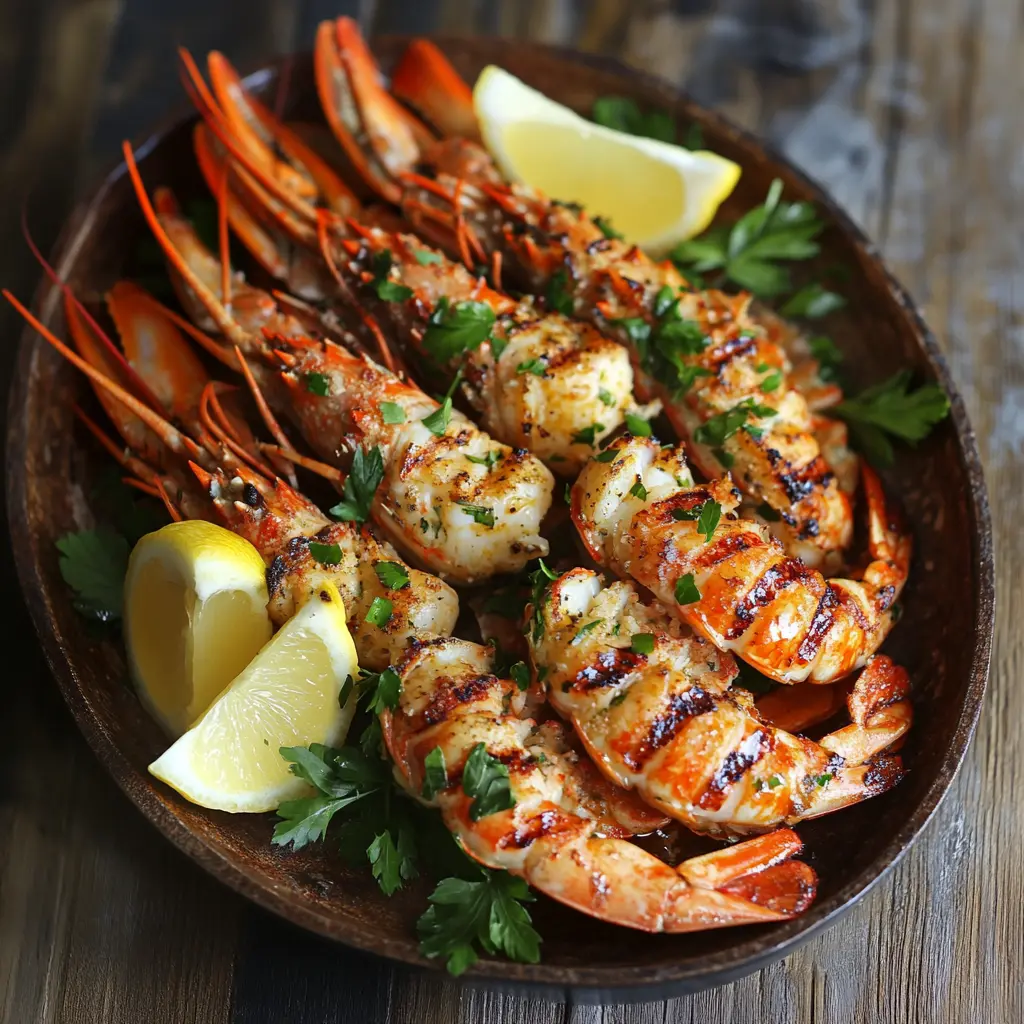
Ingredients
Method
- Rinse the langoustine tails thoroughly under cold running water, gently rubbing the shells to remove any residue. Pat them dry with a clean kitchen towel.
- Hold the langoustine tail firmly in one hand. Use your other hand or kitchen shears to gently crack the underside of the shell along its length. Peel back the shell carefully, starting from the wide end and working toward the tail, being gentle to avoid tearing the delicate meat.
- Use a small knife or skewer to make a shallow cut along the back of the exposed tail meat. Locate the black vein running along the center. Gently lift the vein with the tip of the knife or skewer and pull it out completely. Discard the vein and rinse the meat under cold water if needed. Pat dry.
- Inspect for any remaining bits of shell or debris. If necessary, rinse the tails again under cold water and pat them dry.
- If not cooking immediately, place the cleaned tails in an airtight container and store in the refrigerator for up to 24 hours. For longer storage, use a vacuum-sealed bag and freeze.
- To cook (Grilling Method): Preheat the grill to medium-high heat. Brush the langoustine tails with olive oil and season with minced garlic, salt, and pepper.
- Place the tails flesh-side down on the grill. Cook for 2–3 minutes per side until the shells turn bright orange and the meat becomes opaque.
- Serve immediately with a squeeze of fresh lemon juice and a sprinkle of parsley.
Notes
Don’t overcook them; langoustine tails cook quickly, and overcooking can make the meat rubbery. Watch for the meat to turn opaque and shells to become bright orange, typically 2-3 minutes.
Use high heat for quick methods like grilling or sautéing to seal in natural juices and enhance flavor.
Season lightly with basics like garlic, olive oil, lemon, and fresh herbs to allow their natural sweetness to shine.
Thaw frozen tails overnight in the refrigerator or under cold running water; avoid warm water or microwaving.
Consider cooking the tails with their shells on (split lengthwise) for extra flavor and to protect delicate meat.
Always remove the vein (digestive tract) to avoid a gritty texture and improve presentation.
Save the shells to make flavorful stocks, bisques, or sauces.
Serve immediately after cooking to preserve their juicy texture and vibrant flavor.