Ingredients
Method
- Prepare Langoustines: If using frozen langoustines, thaw them overnight in the refrigerator. Clean the langoustines by rinsing them under cold water. Depending on your chosen cooking method, you may split them lengthwise for grilling or leave them whole for boiling.
- Choose Your Cooking Method:
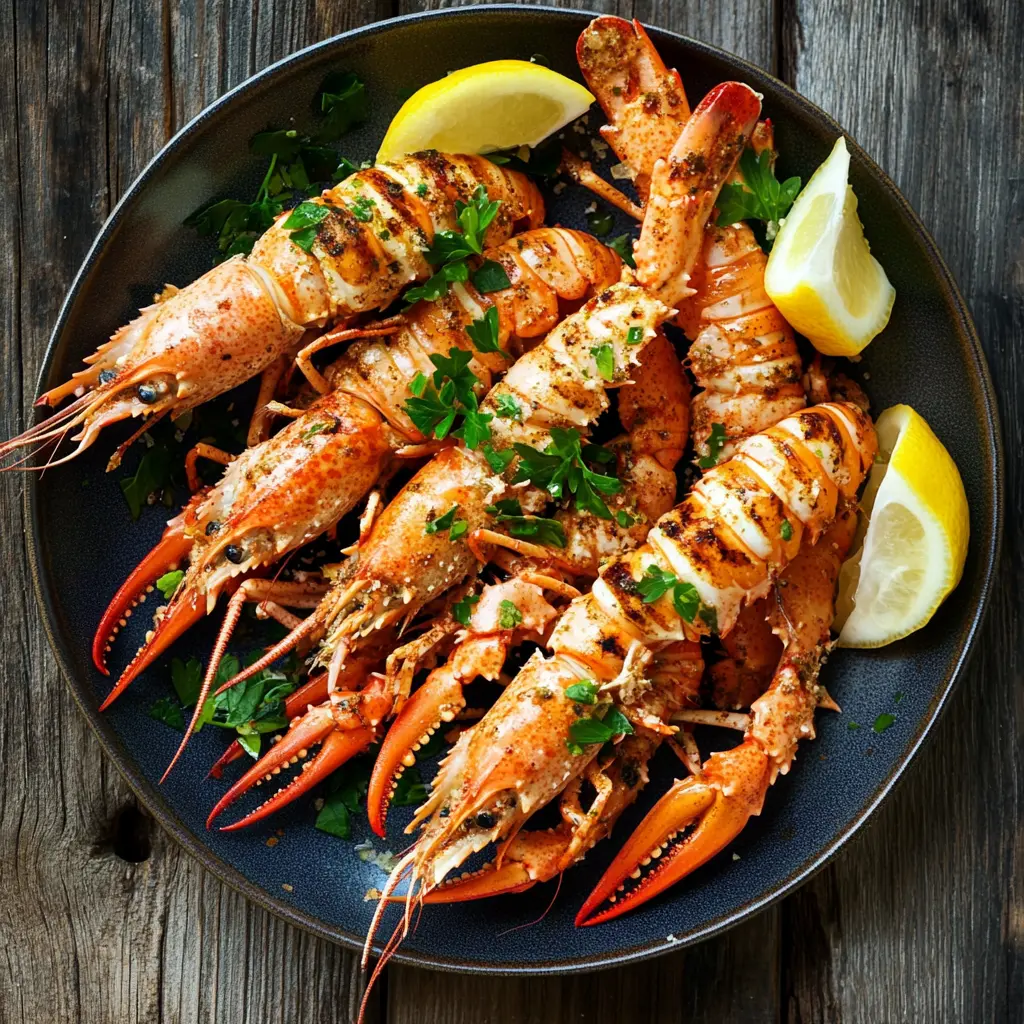
- Grilling: Split langoustines in half lengthwise. Brush the exposed meat with a mixture of garlic and butter, then grill for 2-4 minutes per side until the meat is opaque and the shells turn a vibrant orange-pink.
- Boiling: Bring a pot of salted water to a rolling boil. Add whole langoustines and cook for 2-3 minutes until they turn bright orange-pink.
- Sautéing: Sauté peeled langoustine tails in olive oil with minced garlic and your preferred herbs for 2-4 minutes until they are opaque and tender.
- Steaming: Place langoustines in a steamer basket over boiling water. Cover and steam for 3-5 minutes until fully cooked.
- Serve Immediately: Serve the cooked langoustines with a squeeze of fresh lemon, extra garlic butter, or as an elegant component of a larger dish.
Notes
Langoustines are known by many names, including Norway lobster, scampi, and Dublin Bay prawns.
Their naturally sweet, delicate flavor and tender texture are best preserved with quick cooking methods.
The shells and heads of langoustines are prized by chefs for making rich seafood stocks, bisques, and sauces.
Many langoustine fisheries adhere to sustainable harvesting practices, making them an environmentally friendly seafood choice.