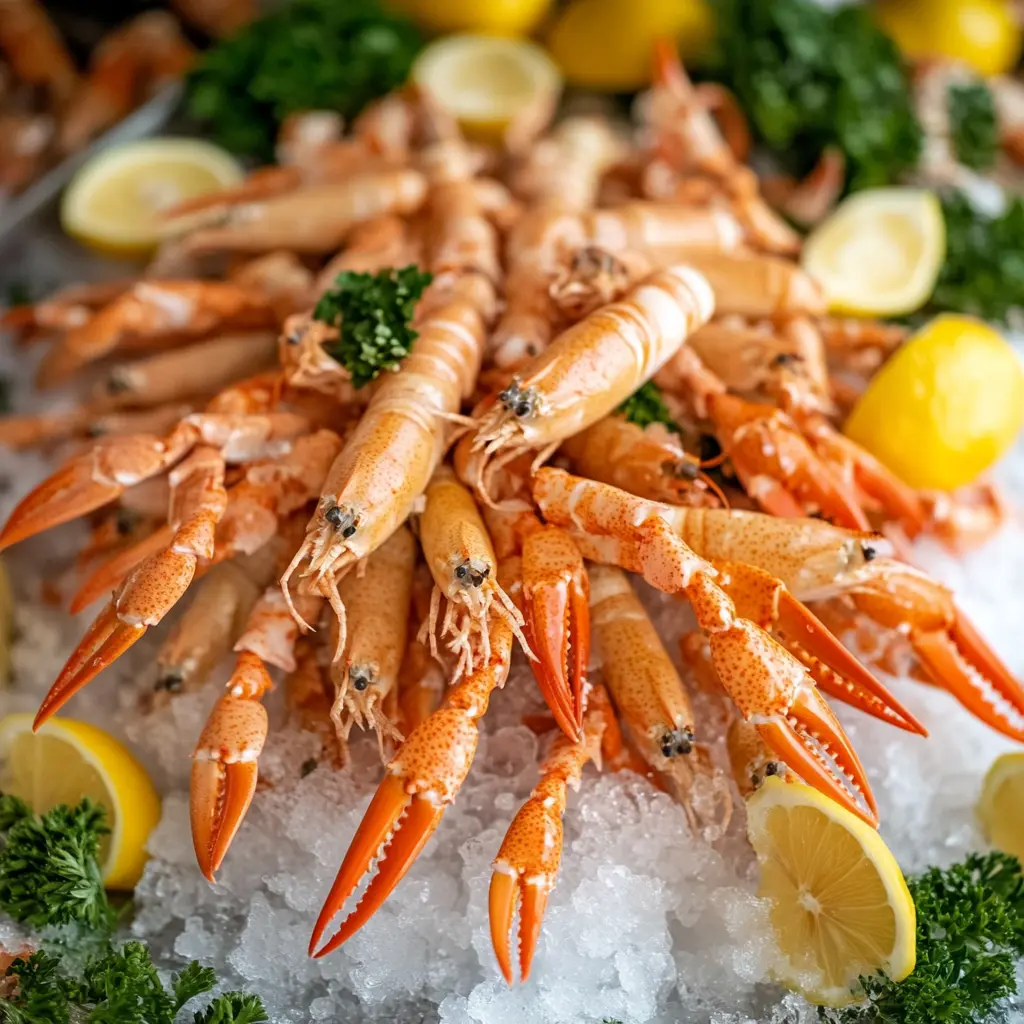
Ingredients
Method
- If using fresh langoustines, clean them thoroughly. If using frozen, thaw properly before cooking.
- Split langoustines in half lengthwise through the shell and meat.
- Prepare a seasoning mixture by melting butter and mixing it with minced garlic, or simply use olive oil.
- Brush the cut side of the langoustines with the garlic butter or olive oil.
- Preheat your grill to medium-high heat. Place the langoustines, flesh-side down, on the hot grill.
- Grill for 2-3 minutes per side, or until the meat is opaque and cooked through.
- Season with salt and black pepper to taste. Serve immediately with lemon wedges and a sprinkle of fresh herbs.
Notes
Langoustines are also known as Norway lobsters, scampi, or Dublin Bay prawns. They have a naturally sweet, delicate flavor and tender, melt-in-your-mouth texture. Cook quickly to avoid toughening the meat. They are a high-protein, low-fat seafood option rich in Omega-3 fatty acids and essential vitamins. Available year-round, but most plentiful from May to September. Sustainable harvesting practices are commonly employed.