
There are some recipes that just feel like home, don’t you agree? For me, this incredible coconut cake recipe holds a special place in my heart, right alongside the laughter and sticky fingers of my three beautiful children. I remember the first time I attempted a homemade coconut cake.
It was for my eldest’s birthday, and I wanted something truly special, something that tasted like a warm hug. Store-bought just wouldn’t do. I scoured my grandmother’s old recipe cards, eager to find a simple yet spectacular coconut cake recipe that wouldn’t keep me in the kitchen all day.
What I discovered was a treasure: a moist, fluffy, and utterly delightful coconut cake recipe that quickly became a family favorite. Now, every time I bake this easy coconut cake, the sweet aroma fills our kitchen, bringing everyone running. It’s more than just a dessert; it’s a memory in the making, a simple act of love baked right in.
If you’ve been searching for the perfect coconut cake recipe that’s both manageable for a busy parent and absolutely irresistible, then you’ve found your new go-to. This really is the best coconut cake recipe, I promise!
Why You’ll Love This Coconut Cake Recipe
As a busy mom, I understand the need for recipes that deliver big on flavor without demanding endless hours. This particular coconut cake recipe truly fits the bill. Firstly, it’s wonderfully straightforward.
You won’t find complicated techniques here, just simple steps that yield incredible results. Secondly, the texture is divine – think incredibly moist crumb and a light, airy frosting that truly melts in your mouth. This isn’t just any coconut cake recipe; it’s a fluffy coconut cake experience.
Thirdly, the natural sweetness of coconut shines through, making every bite feel like a little escape to a tropical paradise. It’s comforting, yet exotic. Moreover, this homemade coconut cake recipe uses ingredients you likely already have in your pantry, making it an accessible treat anytime the craving strikes.
Finally, it’s a real crowd-pleaser. Whether you’re serving it at a birthday party, a family gathering, or just as a special weeknight dessert, this amazing coconut cake recipe always gets rave reviews. It’s a labor of love, yes, but one that feels effortless and brings so much joy. You’ll truly adore baking and sharing this simple coconut cake recipe.
Ingredients You’ll Need
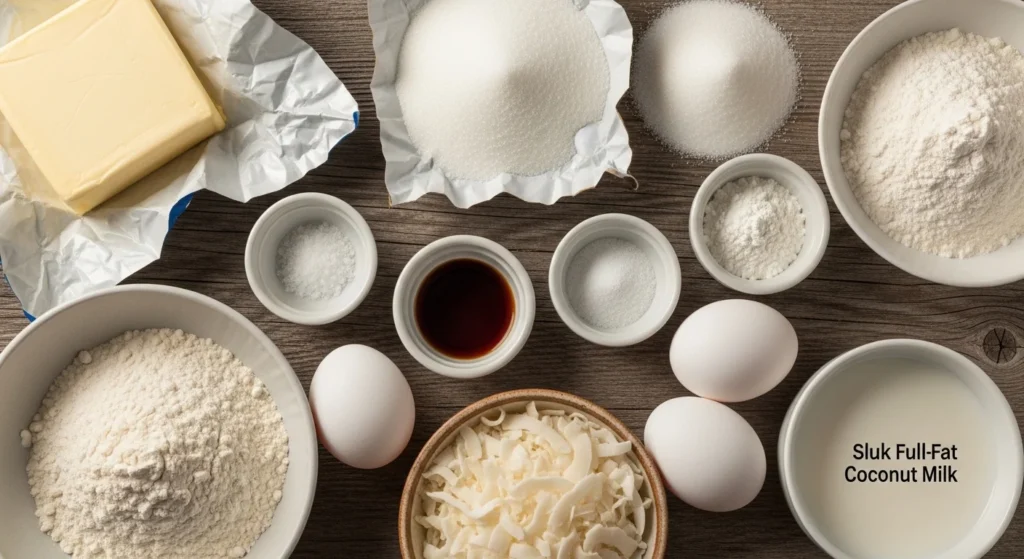
Gathering your ingredients for this delightful coconut cake recipe is the first step towards a truly special treat. You will find that most of these items are pantry staples, making this an easy coconut cake to whip up spontaneously. Always opt for good quality unsweetened shredded coconut for the best flavor, as it really makes this moist coconut cake shine.
Fresh ingredients always make a difference, particularly with baking. Here is everything you need to create this fantastic coconut cake recipe.
For the Cake:
| Ingredient | Quantity |
|---|---|
| All-purpose flour | 2 ½ cups |
| Granulated sugar | 1 ¾ cups |
| Baking powder | 1 tbsp |
| Salt | ½ tsp |
| Unsalted butter (softened) | 1 cup (2 sticks) |
| Large eggs | 4 |
| Vanilla extract | 2 tsp |
| Full-fat canned coconut milk | 1 cup |
| Unsweetened shredded coconut | 1 cup |
For the Coconut Buttercream Frosting:
| Ingredient | Quantity |
|---|---|
| Unsalted butter (softened) | 1 cup (2 sticks) |
| Powdered sugar | 4-5 cups |
| Full-fat canned coconut milk | ¼ cup |
| Vanilla extract | 1 tsp |
| Unsweetened shredded coconut (for garnish) | 1-2 cups |
Substitutions & Variations
One of the beauties of a fantastic coconut cake recipe is its versatility. You can easily adapt this homemade coconut cake to suit different dietary needs or simply to try a new flavor twist. Don’t be afraid to experiment a little; that’s where some of the best kitchen discoveries happen!
- Dairy-Free Coconut Cake: Swap the butter for a good quality dairy-free butter alternative (like Miyoko’s Kitchen or Earth Balance sticks). Use full-fat canned coconut milk for both the cake and frosting as directed. This creates an equally moist and delicious dairy-free coconut cake recipe.
- Gluten-Free Option: Substitute the all-purpose flour with a 1:1 gluten-free baking blend that contains xanthan gum. Ensure it is a blend designed for cakes to maintain the fluffy texture of this easy coconut cake.
- Less Sweet Frosting: If you prefer a less sweet frosting, gradually add the powdered sugar to the buttercream until it reaches your desired sweetness and consistency. You might use closer to 4 cups instead of 5.
- Toasted Coconut: For an extra layer of flavor and texture, toast the shredded coconut for garnish. Simply spread it on a baking sheet and bake at 325°F (160°C) for 5-10 minutes, stirring occasionally, until golden brown. This adds a lovely nutty depth to the overall best coconut cake recipe.
- Lime Zest Addition: A little lime zest in both the cake batter (1 tablespoon) and the frosting (1 teaspoon) can brighten the flavors beautifully, adding a zesty kick to your coconut cake recipe.
- Coconut Extract Boost: For an even more intense coconut flavor, add ½ teaspoon of pure coconut extract to the cake batter and another ¼ teaspoon to the frosting. This truly elevates the coconut profile of this already wonderful fluffy coconut cake.
- Different Pan Sizes: This coconut cake recipe works well in various pans. For cupcakes, bake for 18-22 minutes. For a 9×13 inch sheet cake, bake for 30-35 minutes. Adjust baking times and cooling accordingly. This is a truly adaptable moist coconut cake recipe.
Exploring variations in your favorite coconut desserts can lead to delightful discoveries beyond traditional cakes. If you enjoy the creamy, tropical flavors of coconut, you might also love trying another rich and decadent treat like a French Coconut Cream Pie, which offers a different texture and experience while still highlighting this wonderful ingredient.
Step-by-Step Instructions
Baking this coconut cake recipe is a joyful process, truly. Follow these simple steps, and you will create a show-stopping dessert that everyone will adore. Remember, baking is a science, so measuring accurately is key for this perfect coconut cake recipe. Let’s get baking!
- Prep Your Pans: Preheat your oven to 350°F (175°C). Grease and flour two 8-inch round cake pans. For extra assurance, line the bottoms with parchment paper. This prevents sticking and ensures a clean release for your beautiful homemade coconut cake.
- Combine Dry Ingredients: In a large bowl, whisk together the all-purpose flour, granulated sugar, baking powder, and salt. Make sure these dry ingredients are thoroughly combined. This even distribution helps the cake rise properly.
- Cream Butter and Eggs: In a separate large mixing bowl, using an electric mixer, cream the softened unsalted butter until light and fluffy, about 2 minutes. Gradually beat in the large eggs, one at a time, mixing well after each addition. Scrape down the sides of the bowl as needed to ensure everything combines evenly. Then, mix in the vanilla extract.
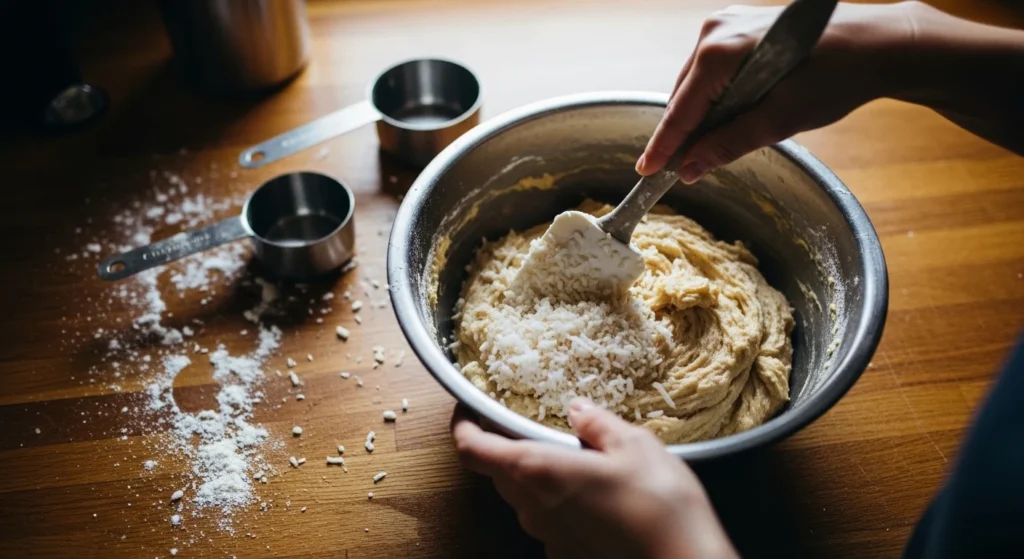
- Alternate Wet and Dry: With the mixer on low speed, gradually add the dry ingredient mixture to the wet ingredients, alternating with the full-fat canned coconut milk. Begin and end with the dry ingredients (flour, coconut milk, flour, coconut milk, flour). Mix until just combined. Do not overmix; overmixing develops gluten and can lead to a tough cake, and we want a fluffy coconut cake!
- Fold in Coconut: Gently fold in the 1 cup of unsweetened shredded coconut using a spatula. This ensures the coconut is evenly distributed throughout your delicious coconut cake recipe.
- Divide and Bake: Divide the cake batter evenly between the two prepared 8-inch round cake pans. Smooth the tops with a spatula. Bake for 28-32 minutes, or until a wooden skewer inserted into the center of the cakes comes out clean.
- Cool the Cakes: Once baked, remove the cakes from the oven. Let them cool in their pans on a wire rack for 10-15 minutes. This allows the cakes to set properly. After this initial cooling, carefully invert the cakes onto the wire rack, remove the pans and parchment paper, and let them cool completely before frosting. Cold cakes are much easier to frost and handle, making your best coconut cake recipe experience smoother.
For the Coconut Buttercream Frosting:
- Cream Butter: In a large mixing bowl, cream the softened unsalted butter with an electric mixer until it’s light and fluffy, about 2-3 minutes.
- Add Powdered Sugar: Gradually add the powdered sugar, about 1 cup at a time, mixing on low speed until combined. Once all the powdered sugar is incorporated, increase the speed to medium-high and beat until smooth.
- Add Liquids: Pour in the ¼ cup of full-fat canned coconut milk and the 1 teaspoon of vanilla extract. Beat on medium-high speed for another 2-3 minutes until the frosting is light, fluffy, and smooth. If the frosting is too thick, add a tiny bit more coconut milk (a teaspoon at a time). If it’s too thin, add more powdered sugar. This ensures a perfect consistency for your moist coconut cake.
- Assemble and Frost: Once the cakes are completely cool, place one cake layer on your serving plate or cake stand. Spread a generous layer of coconut buttercream frosting evenly over the top. Place the second cake layer on top. Frost the top and sides of the entire cake with the remaining buttercream.
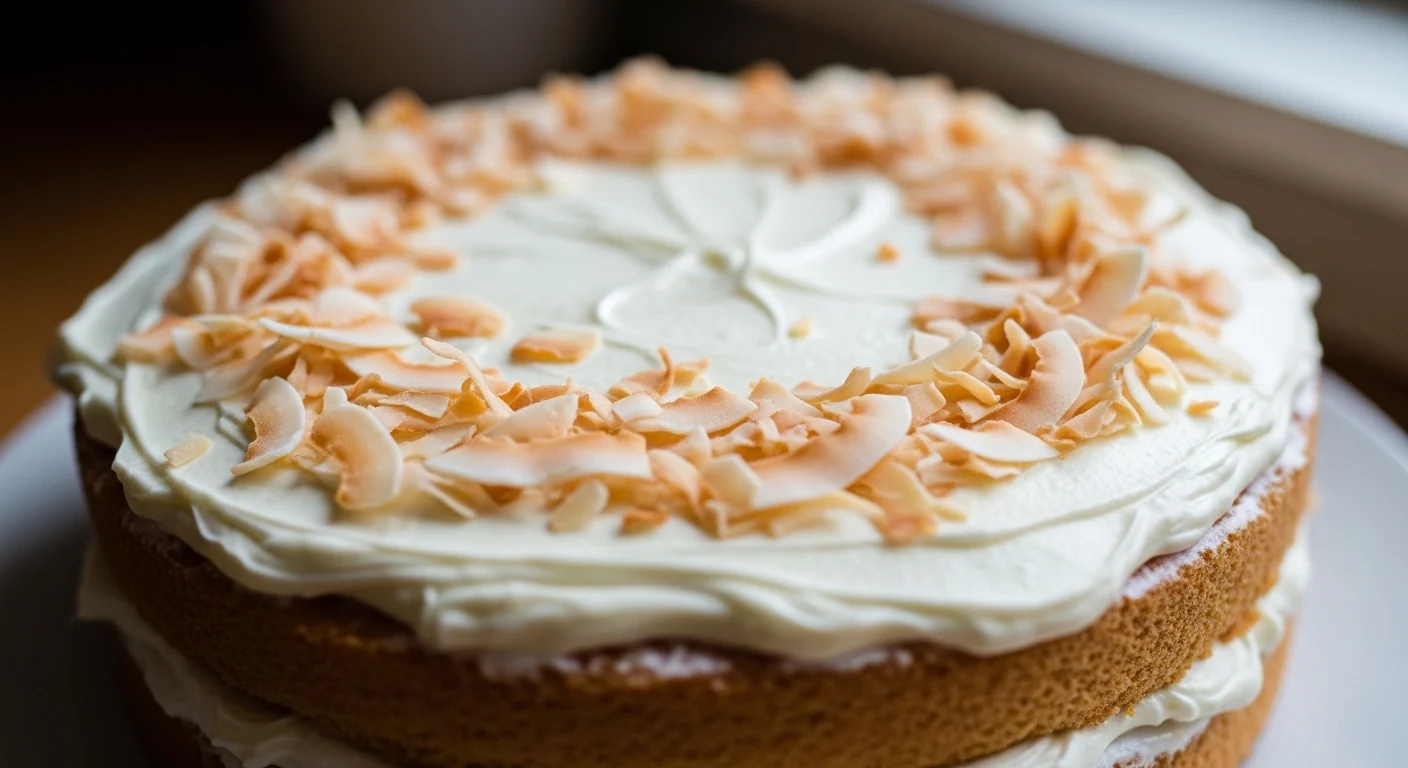
- Garnish: Finally, gently press the additional 1-2 cups of unsweetened shredded coconut onto the sides and top of the frosted coconut cake recipe. This adds texture and that irresistible coconut appeal.
Pro Tips for Success
Baking a truly spectacular coconut cake recipe is all about attention to detail. These little tricks make a big difference, ensuring your homemade coconut cake turns out perfectly moist and delicious every single time. As a mom, I rely on simple, effective tips, and these certainly fit the bill for this easy coconut cake.
- Room Temperature Ingredients: Always use room temperature butter and eggs. They emulsify better, creating a smoother, more uniform batter and a lighter, fluffier cake texture. Take them out of the fridge at least an hour before you start baking your moist coconut cake.
- Measure Flour Correctly: Do not scoop flour directly with your measuring cup. Spoon the flour into the measuring cup and then level it off with a straight edge (like a knife). This prevents overpacking and using too much flour, which can lead to a dense, dry cake. This small step is crucial for a fluffy coconut cake recipe.
- Do Not Overmix: Mix the batter until just combined. Overmixing develops gluten, resulting in a tough, chewy cake instead of the tender crumb we want in this best coconut cake recipe.
- Use Full-Fat Coconut Milk: For both the cake and the frosting, full-fat canned coconut milk is essential. It provides richness, moisture, and that authentic coconut flavor that makes this coconut cake recipe truly shine. Shake the can well before opening to ensure the cream and liquid are combined.
- Cool Completely: Resist the urge to frost warm cakes. Warm cakes will melt your frosting and cause it to slide right off. Ensure your cake layers are completely cool to the touch before you begin frosting your perfect coconut cake.
- Level Your Cakes: If your cake layers dome slightly, use a serrated knife to level the tops once they are cool. This creates even layers and a professional-looking finished homemade coconut cake.
- Parchment Paper is Your Friend: Always line the bottoms of your cake pans with parchment paper after greasing and flouring. It guarantees an easy release and prevents your cakes from sticking, preserving their beautiful shape.
- Taste Your Frosting: As you add powdered sugar to the buttercream, taste it frequently. Adjust the sweetness to your preference. Some prefer a sweeter frosting, while others like it just lightly sweet. This customizable aspect makes it your perfect coconut cake recipe.
Mastering these little details is crucial for achieving that perfect moist crumb and texture in any baked good, ensuring every cake you make is a success. This meticulous approach to baking also works wonders when preparing other delightful desserts, such as a classic pineapple upside-down cake, where precision in ingredient handling and baking time truly shines.
Storage & Reheating Tips
Proper storage ensures your beautiful coconut cake recipe stays fresh and delicious for days. This moist coconut cake holds up remarkably well when stored correctly. You want to preserve that fluffy texture and delightful flavor.
- At Room Temperature: If your kitchen is cool (below 72°F/22°C), you can store the frosted coconut cake at room temperature for up to 2 days, covered loosely with a cake dome or plastic wrap. The butter in the frosting acts as a preservative.
- In the Refrigerator: For longer storage, or if your kitchen is warm, refrigerate the frosted cake in an airtight container for up to 5 days. Chilling the cake can firm up the frosting and crumb slightly.
- Bringing to Room Temperature: For the best flavor and texture, remove the refrigerated coconut cake from the fridge about 30-60 minutes before serving. This allows the cake and frosting to soften to room temperature, enhancing its moistness and flavors.
- Freezing Cake Layers (Unfrosted): You can freeze unfrosted cake layers for up to 2 months. Once completely cool, wrap each layer tightly in plastic wrap, then in aluminum foil. Thaw overnight in the refrigerator before frosting your easy coconut cake.
- Freezing Frosted Cake: For short-term freezing (up to 2 weeks), you can freeze a frosted coconut cake. Flash freeze the whole cake uncovered for an hour or two until the frosting is firm. Then, wrap it tightly in plastic wrap and then in foil. Thaw overnight in the refrigerator.
What to Serve With This Coconut Cake Recipe
This exquisite coconut cake recipe stands beautifully on its own, a true showstopper. However, pairing it with certain accompaniments can elevate the experience even further, turning a simple dessert into a memorable occasion. This moist coconut cake is incredibly versatile.
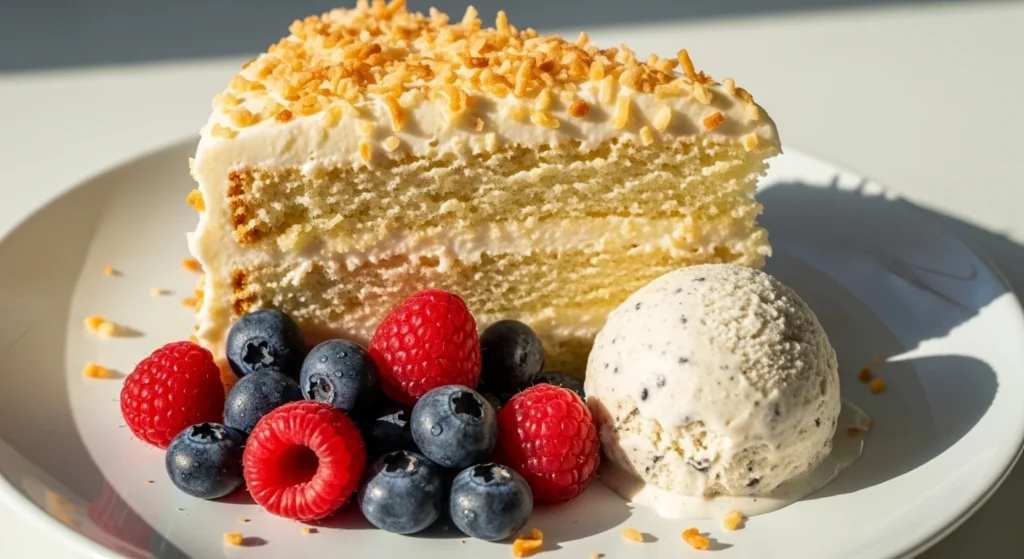
- Fresh Berries: A vibrant mix of fresh berries like raspberries, blueberries, or sliced strawberries adds a burst of freshness and a touch of tartness that beautifully complements the sweet, rich flavors of this easy coconut cake.
- Tropical Fruit Salad: Lean into the tropical vibes! A light fruit salad featuring mango, pineapple, and kiwi offers a refreshing counterpoint to the sweetness of your homemade coconut cake.
- A Scoop of Vanilla Ice Cream: A classic pairing! A high-quality vanilla bean ice cream provides a creamy, cool contrast that everyone loves with a slice of this fluffy coconut cake.
- Warm Raspberry Coulis: A slightly tart raspberry coulis (a thin fruit sauce) drizzled over the plate introduces another layer of flavor and elegance to your best coconut cake recipe.
- Aromatic Coffee or Tea: A rich, dark roast coffee or a fragrant cup of herbal tea (perhaps a tropical fruit blend) makes for a perfect companion, especially after a meal. The warmth contrasts wonderfully with the cake.
- Light Whipped Cream: A dollop of unsweetened or lightly sweetened whipped cream can add an extra layer of lightness, especially if you want to dial back on the richness of the buttercream. It complements the texture of this perfect coconut cake recipe.
- Lime or Passion Fruit Sorbet: For a truly refreshing finish, a small scoop of zesty lime or tangy passion fruit sorbet cleanses the palate and highlights the tropical notes of your coconut cake recipe.
While this magnificent cake is undoubtedly a star on its own, it also pairs beautifully with other beloved desserts for a truly comforting spread. For another nostalgic and satisfying experience, consider serving it alongside a classic like Old-Fashioned Homemade Banana Pudding, creating a perfect balance of flavors and textures.
FAQs
Can I use sweetened shredded coconut for this coconut cake recipe?
While you certainly can use sweetened shredded coconut, I highly recommend unsweetened for this specific coconut cake recipe. Using sweetened coconut will significantly increase the overall sweetness of the cake, potentially making it cloying, especially when paired with the sweet buttercream frosting.
Unsweetened shredded coconut allows the natural flavor of the coconut to shine through without overpowering the delicate balance of this easy coconut cake. If sweetened is all you have, you might consider slightly reducing the sugar in the cake batter, but the best approach for this moist coconut cake is to stick with unsweetened for optimal flavor control.
How do I prevent my coconut cake from drying out?
There are several key steps to ensure your coconut cake recipe remains wonderfully moist. Firstly, do not overmix the batter; overmixing develops gluten, which leads to a tough, dry texture. Mix only until the ingredients are just combined.
Secondly, accurate measurement, especially of flour, is crucial. Too much flour will absorb excess moisture. Spoon and level your flour, rather than scooping it.
Thirdly, avoid overbaking. Start checking for doneness at the minimum baking time suggested. A wooden skewer inserted into the center should come out clean, or with a few moist crumbs attached, but not wet batter.
Lastly, using full-fat coconut milk and ensuring your butter and eggs are at room temperature contribute significantly to the moistness of this fluffy coconut cake. Following these tips guarantees a perfectly tender and delicious homemade coconut cake.
Can I make this coconut cake recipe ahead of time for a party?
Absolutely! This coconut cake recipe is an excellent make-ahead dessert, which is perfect for busy families or entertaining. You can bake the cake layers up to 2-3 days in advance.
Once completely cooled, wrap each layer tightly in plastic wrap and store them at room temperature. For even longer storage, you can freeze the unfrosted layers for up to 2 months, as mentioned in the storage tips. Prepare the buttercream frosting the day before as well, storing it in an airtight container in the refrigerator.
When ready to assemble and serve, simply re-whip the chilled frosting for a few minutes to restore its fluffy texture. Then, proceed with frosting your best coconut cake recipe. This approach makes party day much less stressful!
A coconut cake is a popular dessert consisting of a cake, often a white or yellow cake, topped or filled with frosting and shredded coconut. It is particularly popular in the Southern United States, where it often appears at celebrations and holiday gatherings, cherished for its moist texture and tropical flavor profile. Many traditional recipes feature layers of light sponge cake, rich coconut-flavored frosting, and a generous coating of coconut flakes or shredded coconut.
Nutrition Information (per serving)
Understanding the nutritional breakdown of your favorite treats, even a delightful coconut cake recipe, can be helpful for meal planning. Please note that this information is an estimate based on the ingredients listed for this homemade coconut cake and assumes 12 servings. Actual values may vary depending on specific brands and portion sizes. This easy coconut cake offers a lovely treat in moderation.
| Nutrient | Amount |
|---|---|
| Calories | 450-500 kcal |
| Total Fat | 25-30 g |
| Saturated Fat | 18-22 g |
| Cholesterol | 80-100 mg |
| Sodium | 150-200 mg |
| Total Carbohydrates | 55-65 g |
| Dietary Fiber | 2-3 g |
| Total Sugars | 40-50 g |
| Protein | 4-6 g |
coconut cake recipe
Ingredients
Method
- Prep Your Pans: Preheat your oven to 350°F (175°C). Grease and flour two 8-inch round cake pans. For extra assurance, line the bottoms with parchment paper. This prevents sticking and ensures a clean release for your beautiful homemade coconut cake.
- Combine Dry Ingredients: In a large bowl, whisk together the all-purpose flour, granulated sugar, baking powder, and salt. Make sure these dry ingredients are thoroughly combined. This even distribution helps the cake rise properly.
- Cream Butter and Eggs: In a separate large mixing bowl, using an electric mixer, cream the softened unsalted butter until light and fluffy, about 2 minutes. Gradually beat in the large eggs, one at a time, mixing well after each addition. Scrape down the sides of the bowl as needed to ensure everything combines evenly. Then, mix in the vanilla extract.
- Alternate Wet and Dry: With the mixer on low speed, gradually add the dry ingredient mixture to the wet ingredients, alternating with the full-fat canned coconut milk. Begin and end with the dry ingredients (flour, coconut milk, flour, coconut milk, flour). Mix until just combined. Do not overmix; overmixing develops gluten and can lead to a tough cake, and we want a fluffy coconut cake!
- Fold in Coconut: Gently fold in the 1 cup of unsweetened shredded coconut using a spatula. This ensures the coconut is evenly distributed throughout your delicious coconut cake recipe.
- Divide and Bake: Divide the cake batter evenly between the two prepared 8-inch round cake pans. Smooth the tops with a spatula. Bake for 28-32 minutes, or until a wooden skewer inserted into the center of the cakes comes out clean.
- Cool the Cakes: Once baked, remove the cakes from the oven. Let them cool in their pans on a wire rack for 10-15 minutes. This allows the cakes to set properly. After this initial cooling, carefully invert the cakes onto the wire rack, remove the pans and parchment paper, and let them cool completely before frosting. Cold cakes are much easier to frost and handle, making your best coconut cake recipe experience smoother.
- Cream Butter (Frosting): In a large mixing bowl, cream the softened unsalted butter with an electric mixer until it's light and fluffy, about 2-3 minutes.
- Add Powdered Sugar (Frosting): Gradually add the powdered sugar, about 1 cup at a time, mixing on low speed until combined. Once all the powdered sugar is incorporated, increase the speed to medium-high and beat until smooth.
- Add Liquids (Frosting): Pour in the ¼ cup of full-fat canned coconut milk and the 1 teaspoon of vanilla extract. Beat on medium-high speed for another 2-3 minutes until the frosting is light, fluffy, and smooth. If the frosting is too thick, add a tiny bit more coconut milk (a teaspoon at a time). If it’s too thin, add more powdered sugar. This ensures a perfect consistency for your moist coconut cake.
- Assemble and Frost: Once the cakes are completely cool, place one cake layer on your serving plate or cake stand. Spread a generous layer of coconut buttercream frosting evenly over the top. Place the second cake layer on top. Frost the top and sides of the entire cake with the remaining buttercream.
- Garnish: Finally, gently press the additional 1-2 cups of unsweetened shredded coconut onto the sides and top of the frosted coconut cake recipe. This adds texture and that irresistible coconut appeal.